
Writers’ Guild

The Cardozo Academy Think Tank opens its doors to voices that probe, question, and illuminate. These essays reflect rigorous thought, spirited debate, and deep engagement with Torah and lived experience. Readers will find essays that challenge preconceptions, explore timeless themes, and make meaning out of the complexity of faith and culture.

  • The Condemned City and the Challenge of Interpretation

    In Eliezer Berkovits and Parashat Re'eh by Calev Ben-Dor

    What should we do when a command in the Torah appears to conflict with the Torah’s own deepest moral values?

    Faced with the law of the condemned city, the sages offered radically different answers. Some defended the command as written. Others protested its injustice, restricted it until it became nearly impossible to carry out, or interpreted it so boldly that they concluded it had never happened at all.

    Their debate reaches far beyond one troubling biblical law. It asks whether faithfulness means obeying the text as it stands—or accepting responsibility for where our interpretation may lead.


  • Why We Remember

    Thoughts on Tisha B'Av

    In Tisha B’Av by Yael Shahar

    Jerusalem has been rebuilt. Jewish sovereignty has been restored. So why do we still mourn on Tisha b’Av?

    Perhaps because the day is not only about what others did to us, but about what we did to ourselves—and what we might still do again. Tisha b’Av confronts us with the dangers of division, mistrust, and unequal responsibility, while asking whether we can preserve our sense of shared destiny even when no external enemy forces us to unite.

  • The Waters of Meriva and the Question of Leadership

    In Moses and Parashat Chukat by Calev Ben-Dor

    The mystery of the Waters of Merivah has puzzled readers for centuries. But perhaps the real question is not what Moshe did wrong—but why even the greatest leader cannot lead forever.

  • The Torah’s Case Against Absolute Power

    In Moses and Parashat Korach by Yael Shahar

    Korach's rebellion was about more than challenging Moshe and Aharon. Beneath the drama lies a profound question: How can a society create authority without allowing power to become absolute?

  • Daughters of Tzelafchad

    National maturity and Halachic humility

    In Halacha and Parashat Masei by Yael Shahar

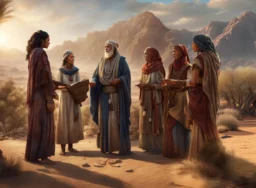
    This week’s Torah reading, parashat Masei, rounds off Sefer BaMidbar (Numbers). Among the narratives of battles, conquests, and politics, we can also discern a subtle shift in divine-human relations: only in the last few parshiot do human beings begin bringing questions and requests to change the law.  In last week’s parashah, the Daughters of Tzelophahad […]

  • Lag baOmer: A lesson in transformation

    Is Lag baOmer just a Jewish adaptation of a pagan holiday, or is there a deeper meaning?

    In Lag BaOmer by Yael Shahar

    Lag baOmer's rising popularity and increasing religious attribution is a good indicator of how holidays evolve in our national consciousness. We seek meaning, and if meaning is lacking, we draw on our collective memory of transformation to supply it.

  • Detail of Lauder Haggadah

    In every Generation

    In Passover by Calev Ben-Dor

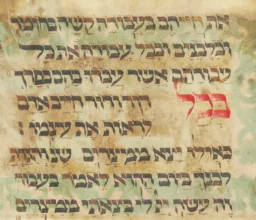
    The phrase “in every generation” appears in two different places in the Hagaddah, but with two very different meanings: “In every generation” they rise up to destroy us, and the Holy One, Blessed be He, delivers us from their hands. But we are also told that “in every generation” we are to liberate ourselves from slavery, which means that we’re also obligated to relieve ourselves of any hate, and fear, towards those who wronged us. Those two “in every generations” clash. Too much focus on one the first (our enemies) undermines our ability to do the second (overcoming hate). Emphasizing the second (no hate) may dull our senses to the reality of the first.

  • Scroll of Esther

    Purim – The Covenant Ratified in Exile

    In Purim by Yael Shahar

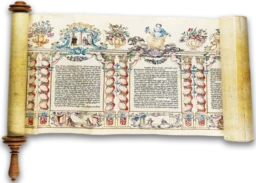
    The rabbis of the Talmud sought to anchor Purim in the Biblical tradition, with varying degrees of success. But one of the most striking rabbinic comments appears in a surprising place: in Massechet Shabbat, we find a curious reference to the events on which Purim is based: “'The Jews confirmed and accepted'—on that occasion they confirmed what they had accepted long before." What exactly, did the Jews living in the Persian exile accept?

  • Finding Meaning in the Book of Job

    In Jewish Thought and Philosophy by Calev Ben-Dor

    About nine years ago, the 929 project was launched. Similar to (but much easier than) Daf Yomi, individuals study one chapter of Tanach a day five days a week, completing the entire cycle in 929 days (3.5 years). Those engaged in it are currently learning the Book of Job, which offers us wisdom in these trying times. 

  • A House Divided – A warning for our time

    In Parashat Vayishlach by Yael Shahar

    In this week’s parashah, Yaakov, now the head of a large family, heads home to the land of Canaan after living for two decades in the house of Lavan. During those years, he has gone from being an “innocent” tent-dweller to becoming a savvy man of business. Having deceived his father and stolen his elder brother’s blessing, he has been deceived in his turn, having been given the elder daughter in marriage before the beloved younger. He has come full circle. But there are hints that Yaakov has still to learn one crucial lesson: the price of fatherly favoritism.

  • The Merit of Isaac’s Ashes

    In Theodicy and Parashat Vayera by Calev Ben-Dor

    The theme of ashes, (efer / עפר) plays a role in two stories in this week’s parsha. Abraham uses the term when entering into negotiation with God to spare the city of S’dom. The other mention of ashes is in the Akeida, where Abraham is commanded to take his beloved son Isaac to Mount Moriah and offer him as an olah, a burnt offering. The story not only fascinated traditional commentators but modern Israeli and Zionist thinkers too. What does this story mean for us today?

  • Lulav and Etrog

    Dancing over the Abyss

    In Sukkot by Yael Shahar

    While other holidays are said to be times of joy as well, Sukkot is singled out in particular by the Torah (D'varim 16:15): "You shall be altogether/only joyful." But can we ever be "only" joyful? Is there ever a time when we are completely without other emotional states? Is the Torah asking of us the impossible?

1 2 3 6