
Yael Shahar

Yael Shahar spent most of her career in intelligence and security studies, with side trips into physics, graphic design, and digital layout.

She has lectured worldwide on a variety of topics, from Jewish education to security studies and threat assessment. Her research on the Internet as an enabler of political and social change led her to a deeper study of Jewish society over the ages.

Her writing on Jewish education and philosophy can be found at www.yaelshahar.com.

  • Daughters of Tzelafchad

    National maturity and Halachic humility

    In Halacha and Parashat Masei by Yael Shahar

    This week’s Torah reading, parashat Masei, rounds off Sefer BaMidbar (Numbers). Among the narratives of battles, conquests, and politics, we can also discern a subtle shift in divine-human relations: only in the last few parshiot do human beings begin bringing questions and requests to change the law.  In last week’s parashah, the Daughters of Tzelophahad […]

  • Lag baOmer: A lesson in transformation

    Is Lag baOmer just a Jewish adaptation of a pagan holiday, or is there a deeper meaning?

    In Lag BaOmer by Yael Shahar

    Lag baOmer's rising popularity and increasing religious attribution is a good indicator of how holidays evolve in our national consciousness. We seek meaning, and if meaning is lacking, we draw on our collective memory of transformation to supply it.

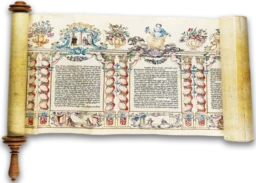
  • Scroll of Esther

    Purim – The Covenant Ratified in Exile

    In Purim by Yael Shahar

    The rabbis of the Talmud sought to anchor Purim in the Biblical tradition, with varying degrees of success. But one of the most striking rabbinic comments appears in a surprising place: in Massechet Shabbat, we find a curious reference to the events on which Purim is based: “'The Jews confirmed and accepted'—on that occasion they confirmed what they had accepted long before." What exactly, did the Jews living in the Persian exile accept?

  • A House Divided – A warning for our time

    In Parashat Vayishlach by Yael Shahar

    In this week’s parashah, Yaakov, now the head of a large family, heads home to the land of Canaan after living for two decades in the house of Lavan. During those years, he has gone from being an “innocent” tent-dweller to becoming a savvy man of business. Having deceived his father and stolen his elder brother’s blessing, he has been deceived in his turn, having been given the elder daughter in marriage before the beloved younger. He has come full circle. But there are hints that Yaakov has still to learn one crucial lesson: the price of fatherly favoritism.

  • Lulav and Etrog

    Dancing over the Abyss

    In Sukkot by Yael Shahar

    While other holidays are said to be times of joy as well, Sukkot is singled out in particular by the Torah (D'varim 16:15): "You shall be altogether/only joyful." But can we ever be "only" joyful? Is there ever a time when we are completely without other emotional states? Is the Torah asking of us the impossible?

  • The Day after the Shabbat – What an ancient controversy teaches us about nation-building

    In Shavuot by Yael Shahar

    Shavuot is one of the three Pilgrimage Holidays mandated by the Torah, and yet the text tells us very little about the holiday or how it is to be observed. Even the date on which it is celebrated is left undefined, leading to intense debate among rival factions during the Second Temple era. In fact, this controversy was part of a much larger debate which threatened to split the Jewish nation along sectarian lines. The split hinged on a major difference of opinion over the nature of Jewish society and its foundation texts: Is the Torah a fixed text, unchangeable for all time, or is it a living document meant to be reinterpreted in the light of changing circumstances?

  • Parashat Midbar – Beyond the I-We Dichotomy

    In Parashat Bamidbar by Yael Shahar

    Sefer BaMidbar is the story of a great test: Can the disparate tribes of Israel put into practice the lessons learned during the revelation at Sinai and the subsequent building of the Mishkan. Can they forge themselves into a nation capable of conquering their ancestral homeland and building a just and lasting society?

  • Wedding canopy in a sunny meadow

    Rabbi Akiva’s Time Capsule – The Song of Songs in Context

    In Jewish Thought and Philosophy by Yael Shahar

    Imagine that civilization was going to be destroyed within five years, and that you were tasked with deciding what literary treasures to preserve? That is the background of the Tanakh that we have today. The Talmud records the bare bones of discussions where scholars fought for the inclusion of those writings that were dear to them, often against ferocious opposition from their colleagues. Amazingly, of all the possible things to include, the famous Rabbi Akiva chose a collection of bawdy wedding songs! What lay behind such an odd choice?

  • The Danger of Negating a Miracle

    In Parashat Shemini by Yael Shahar

    What was the crime of Nadav and Avihu, who were consumed by divine fire while offering incense? It turns out that by comparing this incident with a later one, in which Moshe strikes a rock to bring forth water, we can learn a lot about miracles, holiness, and leadership.

  • The Book of Esther as Political Critique

    In Purim by Yael Shahar

    While the Book of Esther bears all the literary marks of a fairy tale, the underlying themes are far from trivial: At what point does a ruler become unfit to rule? When is civil disobedience not only allowed, but imperative? Why continue to believe in social justice in a seemingly unjust universe?

  • Parashat Vayakhel – The Limits of Creation

    In Parashat Vayakhel by Yael Shahar

    This week's parashah opens with an odd juxtaposition. Just before explaining to the Israelites how the Mishkan is to be constructed, Moshe pauses to exhort the people to sanctify the Shabbat. Why is the commandment of the Shabbat inserted here? The usual answer is that building the Mishkan—as important as it is—nevertheless does not over-ride the prohibition of work on Shabbat. But this only puts off the question: why are we are told to sanctify the Shabbat by ceasing all creative work on that day?

  • Parashat Mishpatim: The Power of Names

    In Parashat Mishpatim by Yael Shahar

    This week’s parashah takes place in the midst of the dramatic ceremony of the Covenant at Sinai. The Israelites have accepted the terms and conditions and now stand poised to sign on the dotted line. Now comes the small print: the actual terms and conditions they are to keep. But there’s something very odd about the way the names of God come up in presenting these laws.... The names of God hint at the nature of law, causality, and justice.