Jewish Thought and Philosophy

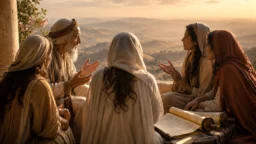
To think Jewishly is to stand at the edge of certainty and still choose to believe, question, and seek. Jewish thought lives in the tension between faith and doubt, law and freedom, eternity and change.

  • Memory Is the Problem

    The World Exists on Manna

    In Jewish Thought and Philosophy and Parashat Eikev by Rabbi Nathan Lopes Cardozo

    Memory helps us make sense of life—but it can also make the miraculous seem ordinary. The manna in the desert challenges our faith in permanence, predictability, and the supposed security of the natural world.

  • Why I Am Trying to be Religious

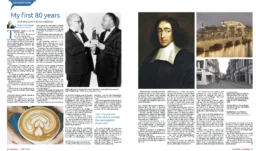
    On My 80th Birthday - An Open Letter to My Children, Grandchildren, and Great-Grandchildren

    In Heschel, Jewish Thought and Philosophy and Parashat Devarim by Rabbi Nathan Lopes Cardozo

    What does it mean to spend a lifetime trying to become religious?

    On his 80th birthday, Rabbi Nathan Lopes Cardozo writes not about accomplishments or memories, but about wonder, failure, gratitude, and the lifelong struggle to remain astonished by existence.

    This deeply personal letter to his children, grandchildren, and great-grandchildren is both a reflection on eight decades of life and an invitation to rediscover the extraordinary hidden within the ordinary.


  • The Daughters of the Tzelofchad and the Danger of Codification

    In Jewish Thought and Philosophy and Parashat Pinchas by Rabbi Nathan Lopes Cardozo

    The daughters of Tzelofchad did far more than win an inheritance dispute. In challenging Moshe, they exposed something profound about the nature of Torah itself. Is even Divine law meant to remain unfinished until human beings complete it?

    This week's essay explores why Judaism's greatest strength may lie not in the Written Torah, but in the courage to continue interpreting it down through the ages.

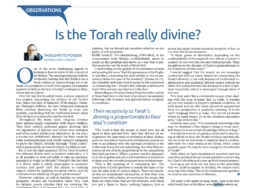
  • Is the Torah Really Divine?

    In Jewish Thought and Philosophy by Rabbi Nathan Lopes Cardozo featured in Jerusalem Post Magazine

    In this essay in the Jerusalem Post Magazine, Rabbi Cardozo asks:"If the Torah is indeed the ultimate divine word as Judaism maintains, is it at all possible or even advisable to take an academic approach to verify its divinity?"

  • The Call to Holiness

    In Israel, Jewish Thought and Philosophy and Parashat Emor by Rabbi Nathan Lopes Cardozo

    Is holiness something we possess—or something we must struggle to become? True holiness emerges only when we live up to our mission—without arrogance, without withdrawal, and even in times of war. But can a nation remain holy while forced to fight for its very existence?

  • Freedom of Will and Determinism

    A Daring Midrash

    In Jewish Thought and Philosophy, Moses, Theodicy and Parashat Vayeshev by Rabbi Nathan Lopes Cardozo

    “Hakol biyadey shamaim chutz meyirat shamaim — everything is from Heaven [determinism] except the fear of Heaven [freedom of will]” This is a profound tenet of Jewish belief. It is not that there are certain times when determinism operates, and other times when humans have free will. Rather, both principles function simultaneously: on one level, human beings seem to have the ability to choose; however, on a different level, all is predetermined.

  • When God Is Hidden and Present at Once

    In Jewish Thought and Philosophy and Parashat Balak by Rabbi Nathan Lopes Cardozo

    While the Israelites wandered in silence, convinced that God had abandoned them, their enemies were unknowingly blessing them under Divine compulsion. What does this hidden drama reveal about faith, paradox, and God’s presence in the darkest chapters of history?