Such are the rituals of the burnt offering, the meal offering, the sin offering, the guilt offering, the offering of ordination, and the sacrifice of well-being,with which the Eternal charged Moses on Mount Sinai, when commanding that the Israelites present their offerings to the Eternal, in the wilderness of Sinai.
Vayikra 7:37-38
The Rambam’s thesis concerning the sacrificial cult sparked one of the most interesting controversies in Jewish history. It would seem at first sight that he was more than a little embarrassed by the sacrificial service in the Temple. The killing of animals, the spilling of the blood, the burning of the kidneys, limbs, and so on — in short, the gore and rituals related to the sacrifices — would appear to be difficult to accept as a representation of the highest ideals of monotheism and Jewish values.
It could therefore be argued that the Rambam found himself in a most awkward position. On the one hand, the sacrificial cult could not be seen as the pinnacle of Jewish ethics and humanitarianism. On the other, it could not be excluded from Jewish tradition altogether, since it is part and parcel of the Divine text of the Torah.
The Rambam’s attempt to synthesize these two seemingly irreconcilable positions, to simultaneously include and exclude this expression of Jewish ritual, is a masterpiece in ingenuity. The sacrificial cult had to be seen as a concession to human weakness. It had to be seen as a process of weaning the people away from idol worship, until the time would come when it would no longer be necessary. Viewed from this perspective, it did not have to represent ideal Judaism and it could still be within the boundaries of Jewish tradition.
As the Rambam writes in his Moreh Nevuchim (Guide for the Perplexed):
It is impossible to go suddenly from one extreme to the other; the nature of man will not allow him suddenly to discontinue everything to which he has been accustomed. Now God sent Moses to make the Israelites a kingdom of priests and a holy nation …
The Israelites were commanded to devote themselves to His service … But the general mode of worship in which the Israelites were brought up (in earlier days) consisted of sacrificing animals in temples containing images, bowing down to these images, and burning incense before them …
It was in accordance with the wisdom of God, as displayed in the whole creation, that He did not command us to give up and discontinue all these modes of worship, for to obey such a commandment would have been contrary to the nature of man …
For this reason, God allowed these rituals to continue. He transferred to His service that which had formerly served as a worship of created beings. . . and commanded us to serve Him in the same manner …[1]
But this explanation raises more questions than it answers. Did the Rambam really believe that this is all there was to Temple sacrifices? Was there no deeper meaning, no greater symbolism? He seems to suggest that the sacrificial cult started within the world of idol worship, only later to become part of Judaism, but was not the first recorded incident of sacrificial offerings that of Kayin and Hevel (Cain and Abel) who, without doubt, brought their sacrifices to God and to no other deity?[2]
There is a strong internal contradiction within the Rambam’s own works. While here he seems to suggest that ultimately mankind (and the Jewish People) will attain a more exalted spiritual plane and will thus no longer be in need of bringing sacrifices, in his Mishne Torah he seems to hold a different position:
The Melech ha-Mashiach [Messiah] will arise in the future and restore the Kingship of the House of David, reestablishing its sovereignty; he will rebuild the Sanctuary and gather in all the dispersed of Israel. In his days all the laws will regain their validity; sacrifices will again be offered.[3]
Thus, the question remains: Will there be sacrifices in the Messianic Age as an expression of an exalted spiritual existence, or will there be no need for sacrifices, since they are nothing more than a concession to human weakness?
In their prayers, Jews recite thrice daily: “Lord, O God, look with favor on Your People …speedily restore worship in Your Temple . . . and accept favorably and with love, Israel’s sacrifices.”[4] So how did the Rambam reconcile this with the views he expressed in the Guide for the Perplexed?
Finally, is he suggesting, if only by implication, that a good part of the Book of Vayikra (which discusses most of the sacrificial laws) and the other books of the Torah do not convey authentic Jewish ideology?
In the Guide, after the above-quoted words, Rambam continues with another highly unusual remark:
If God were to ordain the elimination of the sacrifices, this would be as if a prophet were to come, in our time, who called to the service of God by saying: “The Lord has commanded you that you do not pray to Him, and that you do not fast, and that you do not implore His help in time of trouble, but rather that your service [of Him] consist [only] of thought without action.”[5]
Adding perplexity upon perplexity, one may legitimately exclaim: What exactly is the Rambam trying to say? Is he saying that prayer and fasting must also be seen as concessions to human weakness? More markedly, is he perhaps suggesting that other mitzvot are also somehow a concession, since he gives prayer and fasting only as examples?
The Tent of Meeting
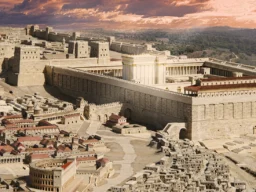
In order to resolve these problems and paradoxes one must examine the temporal center of worship and prayer — the Temple itself. The very nature of this place of worship is rooted in the existence of an earlier place of religious elevation: the Tent of Meeting, a sort of movable Temple.
On the verse “And you shall make it,”[6] relating to the construction of the Tent of Meeting, the famous Italian commentator Rabbi Ovadya Seforno (circa 1470–c. 1550) made the following remarkable statement:
In order that I shall dwell between you, to speak with you and to accept the prayers and the service of Israel. This is not as it was before the sin of the Golden Calf, where it was said: “In any place where I shall have My name mentioned, I shall come to you and bless you.” [7] (italics added)
And a little earlier:
For at the end of the first forty days God gave the tablets made by Himself to sanctify all as priests and a Holy nation, as He had promised. But they rebelled and became corrupt, and fell from this high spiritual level.[8] (italics added)
The Tent of Meeting (and therefore the Temple), says Seforno, are the result of Israel’s choice to do wrong — to opt for the Golden Calf. In other words, had the Golden Calf incident never taken place, the directive to build a Tent of Meeting would never have been given.
What becomes exceedingly clear is that the real Temple, as the site of Divine service, is not limited to the finite world. Its rightful place is the whole universe and that which is beyond the universe: “In any place where I shall have My Name mentioned I shall come to you.” Clearly, God’s greatness is beyond all physical limitations and encompasses the universe and the “worlds” beyond the universe.
If this is the thrust of God’s original intention, then what is the need for a physical place to symbolize God’s dwelling in this world? What purpose is served by the many ritual objects like the Altar, the Menorah, and the Ark in the Holy of Holies? Seforno suggests that the need for these “props” is the direct outcome of the sin of the Golden Calf.
The sin of the Golden Calf
What was the essence of this sin? What mental construct was reflected in this transgression, in which so many of the Jews were involved?
The sin itself could obviously not have been a regular form of idol worship: only a short while earlier, the Jewish People had experienced a Divine revelation of unprecedented intensity. The spoken word of God reached them in an open encounter and was of unquestionable veracity. In one voice the entire people avowed their commitment — “Na’aseh ve-Nishma” — “We shall do and we shall hear.”[9] Once and for all, the existence of God and His relationship to this world had been established. After all this, how could the sin of the Golden Calf have come about?
We can only conclude that the creation of the Golden Calf must be seen as an attempt to deal with this overwhelming experience. After all, to deal with an experience like this requires vast spiritual resources. It demands a spiritual level of unprecedented heights, and above all, the abolition of any physical symbol of the Divinity. In short, this is supreme monotheism, the realization of the unitary and unique nature of God in its most advanced form. Even that which flows forth from God’s unity cannot fully be captured in the mundane. In its ideal state, Judaism should have had no need for symbolism at all. We should be permitted only to contemplate matters of the monotheistic world.
This, however, was unattainable for the generation of the Exodus, which only shortly before had been steeped in a world of idol worship. They were unable to hold on to the unprecedented. The Sinai experience was only possible — so they believed — through a tangible, more down-to-earth medium — otherwise it was in danger of slipping away, dissipating into a spiritual nothingness with no real substantiality, nor indeed eternal validity.
This is undoubtedly the leitmotiv behind the episode of the Golden Calf. There was a perceived need to guarantee the continuation of the revelatory experience of Sinai as an ongoing experience. The form of a calf, symbolic of the godhead in the cultural milieu of Egypt, from which the people had so recently emerged (and also, later, seen by kabbalistic tradition as a symbol of immense spiritual power), was understood to be the most appropriate way to accomplish this goal. It was, however, clear to all involved that this was not meant to be, nor was it perceived as, the monotheistic godhead itself. It was merely a symbol of the Creator and Mover of the Universe in material terms.
This, then, was the reason behind the fashioning of the Golden Calf. However, the creation of this image brought into being a completely different situation. Seforno’s level of monotheism was not yet within the reach of the Israelite people. The fashioning of the Golden Calf showed that the people still could not relate to God without resorting to symbolism. The symbol-less world of ultimate monotheism had, perforce, to accede to a symbol-full monotheism.
The use of symbolic representation is not without its dangers. This is exactly what the incident of the Golden Calf demonstrates. Because of their great emotive power in the world of human imagination, symbols can easily lead to a spiritual misunderstanding. Wrong conclusions may be drawn from a misplaced symbol. It is often beyond human capabilities to create appropriate representations. We may never grasp the metaphysical world to such an extent that we can reflect it within the mundane. Therefore, symbols of this kind can only be received. They cannot be deduced by the limited human mind.
What the makers of the Golden Calf did not understand was that no symbol could ever encompass the essence of God Himself. Even when a symbol might otherwise be called for, only God’s way of dealing in, and with, this world may be reflected in a symbol — not His essence. Only God Himself can adequately conjure up and command an appropriate, yet still approximate, symbol.
Hence, the Divine command for the Tent of Meeting was a more human — and therefore more symbolic — way of getting across the great values of monotheism, while still reminding us of its ultimate symbol-less nature. As suggested by Seforno, the Tent of Meeting can only be seen as a concession to human weakness.
The impudence of prayer
The prayer book instructs the chazan (communal prayer leader) to open the main body of prayers with: “Barchu et Ha-Shem Ha-Mevorach” (Praise You the Lord, Who is ultimately praised). The congregation, however, is requested to simultaneouslysay: “His name is elevated above all praises and blessings.”[10] This is intoned in silence, after which the community responds in a loud voice with: “Baruch Ha-Shem Ha-Mevorach Ie-olam va-ed” (Praised is the Lord, who is ultimately praised). This is, to say the least, something of a paradox: First there is a call to praise God, which is simultaneously belied by a statement that His name is elevated beyond all praises and blessings. In other words, praising God is an impossibility — it is beyond man’s capabilities! After this, the community continues to praise God, as if to say that it is within the power of man to praise God after all.
The same paradox may be found in the Kaddish prayer: “May [God’s] great Name be exalted and hallowed in the world of His creation …He is …honored, exalted, glorified, adored [etc.].” Suddenly, the worshiper is asked to radically change direction: “[God] is beyond the power of all blessings, hymns, praise, and consolation that are said in this world and now say: Amen.”
This paradox is reflected in a story related in the Talmud.[11] Rabbi Chanina once observed a worshiper in the act of praising God with numerous additional accolades. Not only was God “great,” “mighty,” and “powerful” but also “majestic,” “awesome,” “strong,” “fearless,” “sure,” honored,” and so forth. Rabbi Chanina waited for the worshiper to conclude and then asked him if he really thought he had praised God sufficiently? The Talmud tells us that one should only praise God by the three words that Moshe used and leave it at that. We may begin praising God, but we can never do so sufficiently; therefore, any attempt only succeeds in limiting, however fulsome it may be. The more praises one heaps on, the more one ultimately confines God’s attributes. This is nothing short of blasphemy.
The message of this story is that in reality, we should be speechless before God. To grasp the greatness of God should render us silent. No words can ever suffice to extol the awesomeness of this experience. Silence is therefore the highest expression of prayer.
So why do we not stand in a prayer of silent contemplation? Why utter words if no words can ever suffice? The answer is now clear to us: the “prayer of words” is (once more) a concession to human weakness. At the same time, because of our weakness, we cannot stand in contemplative silence; even in meaningful silence we cannot grasp the immense greatness of God. Our minds cannot grasp what our hearts knows.
In the midst of such a silence, our mind would wander, and paradoxically, the focus of our attention would shift away from our Creator. In this state of human weakness, we need to look for other ways to concentrate our minds on our Maker. This, then, is the function of verbal prayer. It is more down-to-earth, more tangible, and therefore, more appropriate to the human condition. Such is the secret of prayer.
This is precisely what the Rambam meant in the seemingly contradictory quote above. The real and full confrontation with God can only be conducted in silent, actionless contemplation. The overpowering experience of real prayer would leave us in a state of such deep humility that nothing could adequately be done or said. Anything less than that is basically a concession.
The Rambam’s understanding of Judaism is one in which concessions to human weakness are not only essential, but also absolute. All mitzvot are essentially concessions, since the experience of God in a most advanced form cannot lead to anything other than contemplation, inaction, and a kind of paralysis.
The future of sacrifices
We may now return to our original discussion regarding the Rambam’s attitude toward the sacrificial cult. Even for the Rambam, sacrifices have a deep religious meaning, albeit a symbolic one.[12] What he is telling us, however, is that there are different stages in the way in which Jews will, in the future, relate to the sacrificial cult.
In the first stage of the Messianic Era, the Jew will again be required to bring sacrifices: Within the world of concession, the world in which Halakhah operates, the sacrifices will once more become essential to Jewish worship. This is clearly portrayed in Rambam’s halakhic masterpiece, Mishneh Torah. But in the Guide, in which he lays down his metaphysical system, the Rambam looks beyond the world of concession. Here, he discusses his conception of supreme monotheism, in which only contemplation is the most eloquent expression of man’s deepest religious motivation.
The sacrificial cult of korbanot, the deepest expression of man’s close relationship with God, is nonetheless no more than a symbol, representing through form and action that absolute proximity. Ultimately, this mitzvah, like all other mitzvot, will find expression in the purest form of drawing close to God in monotheistic worship: contemplation.
The Temple as the site of interaction with the Divine can, as suggested by Seforno, reflect nothing less than the entire universe and beyond. By definition, the physical is incapable of holding the metaphysical. This is the meaning behind the statement of the Sages that the Third Temple will, in a later stage of the Messianic Age, be transformed into a “Temple of fire.”[13]
Idol worship
Regarding Rambam’s observation that the sacrificial cult started in the world of avodah zarah (idol worship), we may suggest that he did not wish to imply that sacrifices were first brought by idol worshipers. This would contradict the story of Kayin and Hevel (Cain and Abel). What he had in mind (and this is borne out by a close study of the text) was that the sacrificial cult started in avodah zarah, taken in its literal meaning: strange worship. It is strange and alien because it did not represent ultimate monotheism as conceived by Seforno. Supreme monotheism, being the realization of Divine unity, can only allow for korbanot (sacrifices) in a contemplative sense — only in the mind. The story of Kayin and Hevel occurred after the Fall and therefore could no longer represent this lofty ideal.
Only before the Fall in the Garden of Eden was there the paradigm of pure monotheism: contemplation and inaction resulting from the overpowering experience of the Divine.
That which is of the highest spiritual form cannot be limited by description or grasped by our five senses. Something which is essentially a spiritual entity cannot be described or envisaged. The metamorphosis of Sinai silenced the normal faculties of perception. Only the essence of things can be contemplated.
It is this that lies at the root of Rambam’s conception of supreme monotheism as reflected in the Guide, and that ultimately resolves the paradoxes that previously defied resolution. The experience of Matan Torah (the Revelation at Mount Sinai) restored the potential to the heights of spiritual awareness and development (which we consequently violated with the incident of the Golden Calf). Our task, says the Rambam, is to recognize and strive towards the realization of that potential.
Note: This essay was originally published in Nathan Lopes Cardozo, Between Silence and Speech: Essays on Jewish Thought (Northvale, NJ: Jason Aronson, 1995), chap 1.
Questions to Ponder
- Rabbi Cardozo argues that symbolic representations, like sacrifices, are a response to human incapacity to relate directly to God. If symbols are necessary but ultimately limiting, does relying on them hinder a more profound spiritual connection with the Divine? Can symbols ever truly capture the essence of God, or do they inevitably fall short?
- “To grasp the greatness of God should render us silent,” writes Rabbi Cardozo. “Silence is therefore the highest expression of prayer.” This silence acknowledges the limits of human language in expressing the Divine. Does this suggest that verbal prayer is inherently inferior? If so, what is the role of communal prayer, which is fundamentally verbal, in fostering spiritual growth? Do you find value in incorporating moments of silent contemplation into your spiritual practice, or do you see verbal prayer as necessary to connection with God?
- The Rambam writes that sacrifices were adapted from practices familiar to the Israelites. This suggest that Divine commandments are influenced by historical and cultural contexts. What form might the sacrificial cult have taken if the commandments were given in today’s cultural landscape? Do you believe that sacrifices will hold a place in future Jewish practice, or do you see them as relics of a bygone era?
- Do you see the episode of the Golden Calf as being rooted in the challenges of relating to the Divine in a tangible way? Are there parallels between the Israelites’ struggle with idolatry and contemporary challenges facing Jews today?
- The Rambam’s conception of supreme monotheism transcends the limitations of human perception and understanding. How does this perspective influence your understanding of the Divine and your own spiritual aspirations? Do you find comfort in the idea of a God whose essence cannot be fully grasped by human intellect, or does it pose challenges to your faith and theological beliefs?
Notes:
[1] Moreh Nevuchim, part 3, chap 32.
[2] Bereshit, chap 4.
[3] Mishne Torah, Hilchot Melachim, 11:1.
[4] The Shemoneh Esreh prayer, the blessing of Retze (the eighteen-benediction prayer that is said every morning, afternoon, and evening).
[5] Moreh Nevuchim, part 3, chap 32.
[6] Shemot 25:9.
[7] Seforno on Shemot 25:9.
[8] Seforno on Shemot 24:18 See also Seforno’s introduction to the Torah, Kavvanot ha-Torah s.v “U-vchen ra’uy le-hitbonen”; Ibid commentary on Shemot 31:18; Ibid commentary on Vayikra 11:2 For a detailed discussion of the Seforno’s view see Nathan Lopes Cardozo, Jewish Law as Rebellion: A Plea for Religious Authenticity and Halakhic Courage (Jerusalem: Urim Publications, 2018), chap 18.
[9] Shemot 24:7.
[10] This verse appears in Nechemia 9:5 This silent prayer which the congregation chants while the chazan proclaims, “Barchu et Ha-Shem Ha-Mevorach,” is part of many prayer rites (nuschaot, (see for example the Siddur Nusach Sepharad, Venice, 1524) including the Spanish-Portuguese prayer rite The full text in Hebrew is:
ישתבח ויתפאר שמו של מלך מלכי המלכים הקדוש ברוך הוא. שהוא ראשון והוא אחרון ומבלעדיו אין א-להים. יהי שם ה’ מבורך מעתה ועד עולם ומרומם על כל ברכה ותהלה.
[11] Berachot 33b.
[12] See his observations in Moreh Nevuchim, part 3, chap 46.
[13] See Midrash Tanchuma, Warsaw ed., Ki Tisa 13; Sukkah 41a and the commentary of Rashi See also R Natan Gottlieb, Otzar Machamadim (Jerusalem, 2012), 311-315.