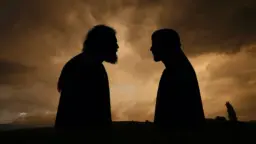
Abraham

Avraham Avinu (Abraham, our Father)

Before there was a nation, before there was a Torah, there was a man who dared to begin. Abraham is the father of Judaism not because he possessed certainty, but because he was willing to journey into the unknown.

Yet Abraham’s greatness lies not only in his obedience, but in his defiance. He argues with God over the fate of Sodom, challenges injustice, and embodies a radical hospitality.

To encounter Abraham is to rediscover the courage to begin again. What does it mean to trust a voice that calls us beyond ourselves? How do we balance loyalty to tradition with the responsibility to challenge even the Divine in the name of justice? In Avraham Avinu, faith becomes a journey—unfinished, demanding, and profoundly human.

  • From Beethoven to Esav

    In Abraham and Parashat Toldot by Rabbi Nathan Lopes Cardozo

    According to the Divine plan, Yaacov and Esav started life as twins in the same womb. Although their paths later diverge, they each have a part to play in the drama of history. Esav sold his birthright to Yaacov, but he cannot reconcile himself to this sale. It was a mekach ta’ut—a faulty sale. After all, one cannot sell one’s very being! Esav begs his father Yitzchak: Bless me too. I am still part of your nation. Even if a Jew abandons his mission, rejecting everything Jewish and turning against his own people, he remains a Jew.

  • Is Death Really the End

    In Abraham and Parashat Chayei Sarah by Rabbi Nathan Lopes Cardozo

    One who lives with the possibility that there may be an afterlife will think carefully about what to do with his or her life on earth. After all, if there is an aspect of life that is eternal, this life on earth may have an entirely different meaning than we think.

  • The Contradictory God

    In Abraham and Parashat Vayera by Rabbi Nathan Lopes Cardozo

    Avraham is the prototype of every Jew. And his greatest trial is what is experienced by all Jews: the impossibility of identifying God in terms of consistency and goodness.

  • The Courage to Begin Anew

    In Abraham, The Kotzker Rebbe and Parashat Lech Lecha by Rabbi Nathan Lopes Cardozo

    Faith does not begin in continuity, but in disruption. Avraham teaches that God is found through risk, doubt, and radical individuality—not through imitation. To walk with God is to walk into the unknown. God’s call to Avraham shatters the comforts of the familiar and demands a faith born in freedom, doubt, and discovery. Only the one who dares to leave home—spiritually and intellectually—can encounter the Divine and bring blessing to humanity.

  • Buying One’s Wife?

    In Abraham and Parashat Ki Teitzei by Rabbi Nathan Lopes Cardozo

    The Talmud seems to compare marriage to the purchase of land. But is this comparison really what it seems? In fact, we can flip the script: the Talmud’s comparison isn’t reducing a woman to property; it elevates the Land of Israel to a covenantal spouse. A ring becomes a down payment on lifelong responsibility; the land, a living partner that must be continually ‘courted.’ What if marriage teaches us how to love a land—and a land teaches us how to be a partner?

  • Trees & Sky

    Abraham and Problem of Evil

    In Abraham, Jewish Thought and Philosophy and Theodicy by Rabbi Nathan Lopes Cardozo

    A God Who is good, yet the existence of evil, is an age-old dilemma. Authentic faith leads to questions and even indignation at perceived injustices. It is the true believer who reacts to realities that seem unjust and that result in suffering - remaining complacent is unacceptable! Simultaneously, one must remember the very little he can fathom about our world.

  • Avraham and Individuality

    Old Age and Facelifts

    In Abraham and Parashat Toldot by Rabbi Nathan Lopes Cardozo

    For the authentically religious personality, religion can be experienced and lived only in a state of originality. Any imitation of fellow worshipers is serving oneself and not God. In essence, religion is an attempt to search for God, the ultimate Original.

  • The Religious Scandal of Akedat Yitzhak and the Tragedy of God

    In Abraham and Parashat Vayera by Rabbi Nathan Lopes Cardozo

    Prior to the Akeda, Avraham still lives in the world where man submits unconditionally to any god, whatever its demands. He is still a child of his times. Only when God, by way of His angel, shouts No! “Do not lay a hand on the boy” does Avraham wake up from his so-called religiosity.

  • On The Israeli-Arab Conflict: A Biblical Perspective

    In Abraham, Israel and Parashat Bereshit by Rabbi Nathan Lopes Cardozo

    History is not made up of social, political, or economic factors alone, but also of spiritual forces that have far-reaching moral implications. The Torah and Jewish tradition may help us achieve deeper insight.

  • The Struggle for Faith

    In Abraham, Jewish Thought and Philosophy and Parashat Vayera by Rabbi Nathan Lopes Cardozo

    For the biblical personality and those living in early post-biblical times, the existence of God was apparent. One would discover His fingerprints everywhere: in heaven, on earth, in the colors of a flower, in the stormy sky, in the thunder and lightning, in the smile of a baby or the beauty of the seashore.