Moses

Moshe Rabbenu (Moses, our Teacher)

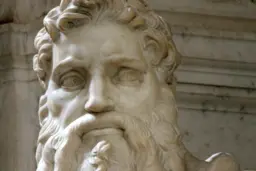
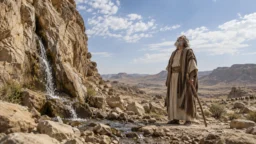
There are figures in history who shape events—and then there are those who reshape the very possibility of history. Moses stands at the threshold between heaven and earth, a reluctant leader who becomes the greatest prophet of Israel. He is not only the one who leads the Israelites out of Egypt, but the one who teaches them how to become a people: bound not by power or land, but by covenant, memory, and responsibility.

Yet Moses is also a paradox. He speaks with God “face to face,” and yet struggles with speech. He ascends Sinai to receive the Torah, yet breaks the tablets in a moment of moral fury. He leads his people for forty years, yet never enters the Promised Land. In him, we encounter the tension between vision and reality, divine ideal and human limitation—a tension that lies at the heart of religious life itself.

  • From Nothingness to Somethingness

    In Moses and Parashat Beshalach by Rabbi Nathan Lopes Cardozo

    What does it mean to walk on dry land while standing in the midst of the sea? The crossing of the Sea of Reeds can be seen as a miracle of nature, but it can also represent a moment of terrifying becoming. The Torah's description speaks of paradox, the idea that existence itself emerges from nothingness—and that Israel was born precisely in that fragile space between what is no longer and what is not yet.

  • Freedom of Will and Determinism

    A Daring Midrash

    In Jewish Thought and Philosophy, Moses, Theodicy and Parashat Vayeshev by Rabbi Nathan Lopes Cardozo

    “Hakol biyadey shamaim chutz meyirat shamaim — everything is from Heaven [determinism] except the fear of Heaven [freedom of will]” This is a profound tenet of Jewish belief. It is not that there are certain times when determinism operates, and other times when humans have free will. Rather, both principles function simultaneously: on one level, human beings seem to have the ability to choose; however, on a different level, all is predetermined.

  • The Tragedy of the Man Who Surpassed Himself

    In Moses and Parashat Beha'alotcha by Yael Shahar

    Moshe’s greatness is unprecedented. But this greatness cost him dearly and ultimately turned him into a tragic figure. Much goes wrong in his life because he was too great.

  • Moshe’s Finest Hour

    The Breaking of the Tablets

    In Moses, The Kotzker Rebbe and Parashat V'Zot HaBerachah by Rabbi Nathan Lopes Cardozo

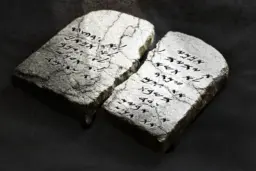
    Moshe Rabbenu’s greatest deed wasn’t splitting the Sea or ascending Sinai. It was shattering the God-engraved Tablets when Israel danced around the Calf. And yet, for this act, Moshe is praised by our sages. Moshe’s audacity saved Torah from becoming stone: a law without music, ritual without spirit. What he broke, he preserved—so that covenant could live.

  • Does God Really Exist?

    In Moses and Parashat Ki Tavo by Rabbi Nathan Lopes Cardozo

    Ki Tavo’s strangest verb—he’emarta—hints at a mutual avowal: Israel “says” God into the world by living the commandments, and God “says” Israel into being as a holy people. This essay moves beyond proofs of “existence” to ask how God becomes audible in history, from Maimonides to a Hasidic teaching about the silent Aleph of “Anochi.”

  • From Anger to Awe

    Moshe’s Pugnacity and the Greatness of Self-Transformation

    In Moses and Parashat Devarim by Rabbi Nathan Lopes Cardozo

    He began as a reluctant, angry man with no eloquence and no clear path. Yet Moshe became the greatest spiritual leader in history—not by nature, but by sheer force of will. What does his transformation teach us about humility, greatness, and the power of inner struggle?

  • Moshe’s Failure to Educate God

    In Moses and Parashat Va'era by Rabbi Nathan Lopes Cardozo

    Who is the Eternal, that I should listen to His voice to let Israel go? I know not the Eternal and moreover I will not let Israel go. Shemot 5:2 When reading the story of the Ten plaques, one gets the impression that there is something absurd about the story. Why should Pharaoh listen to […]

  • The Unorthodox Education of Moshe Rabbenu

    In Defense of Heresy

    In Converting to Judaism, Education, Jewish Thought and Philosophy, Moses and Parashat Shemot by Rabbi Nathan Lopes Cardozo

    Judaism was born out of opposition, rebellion and protest. It overthrew and outlived mighty empires and gave the world a radically new understanding of itself. Judaism has nothing to fear. It has prevailed over all those who criticized it but has also learned much about itself by listening to opposing voices. Through these voices, it has been able to sharpen its own claims and if necessary change its mind when the inadequacy of these claims has become clear. Only in this way will it continue to play a central role in the future of mankind.

  • Knowing How to Lose

    In Jewish Thought and Philosophy, Moses and Parashat Shemot by Rabbi Nathan Lopes Cardozo

    What was Moshe’s secret that enabled him to continue to fight for his goals, in spite of everything, and succeed where so many others would have failed? The answer is simple: he knew how to lose. He knew that his failures were in fact the building blocks for his future successes.