Maimonides

The Rambam (1135-1204)

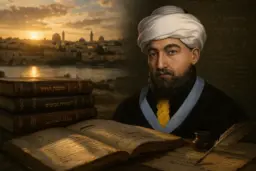
Moses ben Maimon, known by the acronym Rambam, was one of the greatest Jewish thinkers of the Middle Ages, whose influence continues to shape Jewish law and philosophy to this day. He was born in 1138 in Córdoba, Spain, and was forced into exile with his family due to religious persecution, eventually settling in Fustat (Old Cairo), Egypt.

A towering halachic authority, Rambam authored the Mishneh Torah, a monumental code that systematically organizes all of Jewish law with remarkable clarity and precision. At the same time, he was a profound philosopher, best known for his Guide for the Perplexed, in which he sought to harmonize traditional Jewish belief with Aristotelian philosophy. His work reflects a bold intellectual openness combined with deep commitment to Halacha.

In addition to his scholarly achievements, Rambam served as a physician to the royal court in Egypt and was a communal leader of great stature. His legacy lies not only in his legal rulings and philosophical writings, but in his enduring vision of Judaism as both intellectually rigorous and spiritually profound—capable of engaging the widest horizons of human thought.

  • The Enigma of the Cities of Refuge and the Death of the High Priest

    In Maimonides, Parashat Masei and Parashat Matot by Rabbi Nathan Lopes Cardozo

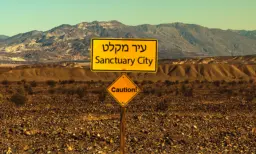
    The commandment to designate six cities of refuge (arei miklat) for one who commits unintentional homicide remains one of the Torah’s great enigmas. On the surface, it appears to straddle justice, mercy, and vengeance in a confusing blend. But upon deeper analysis, it speaks to profound spiritual and psychological truths.

  • War and the Challenge of Conscience

    In Maimonides and Parashat Shelach by Rabbi Nathan Lopes Cardozo

    In Parashat Shelach, the spies feared giants. But perhaps what they truly feared was the moral burden of destiny. In this deeply personal and timely reflection, Rabbi Nathan Lopes Cardozo explores the tragedy of justified war, the conscience of a chosen people, and what it means to be holy in a world that demands violence.

  • The Book Between the Books Thoughts on Parashat Beha’alotecha

    In Maimonides and Parashat Beha'alotcha by Rabbi Nathan Lopes Cardozo

    Why do the Jewish people exist outside of history? What does it mean for a book of the Torah to contain a ‘book within a book’? In Parashat Beha’alotecha, we explore a deeper view of identity, memory, and Divine presence—through the Ark, the wilderness, and two verses that upend everything we know about linear time.

  • The Sotah Ritual

    The Trial That Should Not Have Been

    Reflections on the Sotah Ritual

    In Maimonides and Parashat Naso by Rabbi Nathan Lopes Cardozo

    One of the most disturbing and mystifying rituals in the Torah is case of the Sotah—the woman suspected by her husband of adultery. What is this strange ritual all about?

  • Unity, not Uniformity

    Changing the discourse in Israel

    In Maimonides and Parashat Metzora by Rabbi Nathan Lopes Cardozo

    In these difficult days, we have a moral obligation to create an environment for respectful discourse. We should all do what we can to provide our families, our friends, and our children with the tools to control how we speak about and to one another. The noble teachings of the Jewish Tradition could greatly help with this.

  • The High Priest, the Pope and I – Ten Questions for Rabbi Cardozo by Rav Ari Ze’ev Schwartz

    In Jewish Thought and Philosophy, Maimonides and Rav Kook by Rabbi Nathan Lopes Cardozo

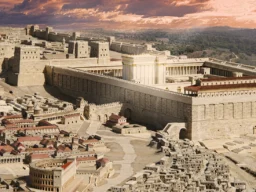
    However blasphemous this may sound, the Kohein Gadol was to be the original pope. Basically, the papacy is a Jewish function, tasked not with the mission of spreading the gospel, but rather promulgating monotheism, morality and the Torah, as far as it is applicable to the non-Jewish world.

  • Theocracy, Democracy, and Halacha

    In Maimonides, Rav Kook and Parashat Beha'alotcha by Rabbi Nathan Lopes Cardozo

    The clash between religion and democracy is often seen as unavoidable. But what if Judaism was never meant to choose? Here we propse a radically different model—one in which divine law and human authority coexist, like the flames of the menorah, each illuminating the center.

  • The In-Authenticity of Codifying Jewish Law

    In Halacha, Jewish Thought and Philosophy, Maimonides and The Ishbitzer by Rabbi Nathan Lopes Cardozo

    Halacha is the practical upshot of unfinalized beliefs, a practical way of life while remaining in theological suspense. In matters of the spirit and the quest to find God, it is not possible to come to final conclusions. The quest for God must remain open-ended to enable the human spirit to find its way through trial and discovery.