
The Kotzker Rebbe

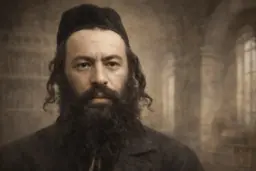
Rabbi Menachem Mendel Morgenstern of Kotzk (1787–1859)

The Kotzker Rebbe was a profoundly influential and reclusive Polish Hasidic leader known for his uncompromising pursuit of truth, sharp wit, and fiery, intellectual approach to Hasidism.

He championed radical honesty, deep self-scrutiny, and rejecting shallow piety. His teachings focused on introspection rather than looking upward at heavenly mysteries.

He transformed Hasidism by focusing on a small, elite group of disciples rather than the masses. His ideas spread through his followers, and he remains one of the most influential figures in the history of Hasidism.

  • The Courage to Begin Anew

    In Abraham, The Kotzker Rebbe and Parashat Lech Lecha by Rabbi Nathan Lopes Cardozo

    Faith does not begin in continuity, but in disruption. Avraham teaches that God is found through risk, doubt, and radical individuality—not through imitation. To walk with God is to walk into the unknown. God’s call to Avraham shatters the comforts of the familiar and demands a faith born in freedom, doubt, and discovery. Only the one who dares to leave home—spiritually and intellectually—can encounter the Divine and bring blessing to humanity.

  • Moshe’s Finest Hour

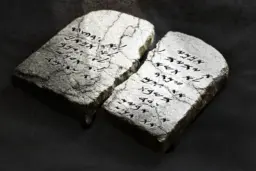
    The Breaking of the Tablets

    In Moses, The Kotzker Rebbe and Parashat V'Zot HaBerachah by Rabbi Nathan Lopes Cardozo

    Moshe Rabbenu’s greatest deed wasn’t splitting the Sea or ascending Sinai. It was shattering the God-engraved Tablets when Israel danced around the Calf. And yet, for this act, Moshe is praised by our sages. Moshe’s audacity saved Torah from becoming stone: a law without music, ritual without spirit. What he broke, he preserved—so that covenant could live.

  • Binder folders

    The Future of a Marriage – The Good News File

    In Jewish Thought and Philosophy and The Kotzker Rebbe by Rabbi Nathan Lopes Cardozo

    Experiencing low points in life is par for the course. Contending with these and the accompanying negative emotions and moods can be challenging and difficult. The correct perspective of what we have, our reality, and the true power we hold to alter and improve the direction of our lives is a sure tool in facing life.

  • running man on bridge

    It is Not the Events We Suffer But Our Judgment Thereof

    In Jewish Thought and Philosophy and The Kotzker Rebbe by Rabbi Nathan Lopes Cardozo

    Our lives are filled with multiple events that impact us deeply. Some of these events are negative and have the potential of crushing our hopes and extinguishing the inner flame burning within us that motivates and drives us. And among these events there are circumstances we can change, and others we cannot. The correct perspective regarding the circumstances of our lives is not only the key to surviving but even holds within it the potential for our own growth and touching the lives of others.

  • The Kotzker, Spinoza and I – Ten Questions for Rabbi Cardozo by Rav Ari Ze’ev Schwartz

    In Jewish Thought and Philosophy, Spinoza and The Kotzker Rebbe by Rabbi Nathan Lopes Cardozo

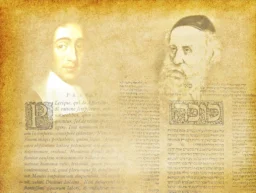
    I've always wondered what would have happened if Spinoza had met the Kotzker. Both were obsessed with truth, but each approached it from a different point of view. In Spinoza's pantheism, there is a strong Kabbalistic element but, simultaneously, a denial of a personal (biblical) God. However much some Spinoza scholars want to claim that all of his philosophy was based on pure reason, it is very clear that there are elements in his philosophy that reveal aspects of mysticism. Both were searching for God and knew no compromise.

  • Spinoza’s Blunder And Noach’s Misguided Religiosity

    In Spinoza, The Kotzker Rebbe and Parashat Noach by Rabbi Nathan Lopes Cardozo

    In his Tractatus Theologico-Politicus, Spinoza accuses Judaism of demanding obsessive and outrageous obedience. Parashat Noach teaches us that while Spinoza’s assessment is entirely mistaken, it is a warning to many religious Jews who know nothing other than "negative" obedience as opposed to positive obedience. Judaism teaches us to stand on our own feet and make our own decisions.

  • Our Struggle with God’s Goodness

    In The Kotzker Rebbe, Theodicy and Parashat Chayei Sarah by Rabbi Nathan Lopes Cardozo

    To believe in God is to believe not only that there is ultimate meaning to our existence but also that this meaning is completely beyond our comprehension. We do not know why God created the universe and man; to know that, we would have to be God.

  • Mixing with This World While Washing Your Hands of It

    Tetzaveh - The Trivialities of the Tabernacle

    In The Kotzker Rebbe and Parashat Tetzaveh by Rabbi Nathan Lopes Cardozo

    Judaism is the theology of the physical, the commonplace and the mundane. It is concerned with the everydayness of our lives and struggles, with the devastating effect brought on by the curse of the multitude of trivialities that often keep us busy from morning till night. It struggles with the emptiness of our lives when we do not even have the time to focus on the higher meaning of our existence. Man's paradox is that he is too much at home in this world yet needs to escape his worldliness in order to be consciously part of the universe.