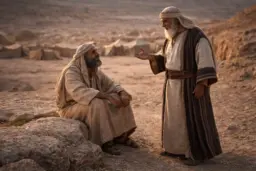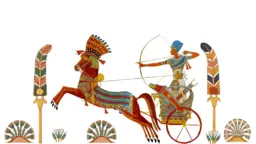
Who is the Eternal, that I should listen to His voice to let Israel go? I know not the Eternal and moreover I will not let Israel go.
Shemot 5:2
When reading the story of the Ten plaques, one gets the impression that there is something absurd about the story. Why should Pharaoh listen to Moshe and allow the Israelites to leave Egypt? And why all these plaques?
After all, let us be honest, Pharaoh has never heard of this God. He was educated in a world of polytheism in which he himself was the ultimate god. Why should he listen to Moshe and Aaron, who tell him that there is a God greater than him, and that he’d better listen to Him? On what basis should Pharaoh take Moshe and Aaron seriously? To him they were charlatans.
And so, he gives these two a real scolding when they come to him with not just a simple request, but with incredible chutzpah, with impertinence. They demand no less than the liberation a few million slaves whose departure from the country will ruin the economy and destroy the infrastructure of Pharaoh’s dictatorship.
Surely the only proper answer is exactly what Pharaoh tells them: “Who is the Eternal, that I should listen to His voice to let Israel go? I know not the Eternal and moreover I will not let Israel go.”
What else do we expect Pharaoh to say?
It is only natural that the words of Moshe and Aaron fall on deaf ears. In fact, they have the opposite effect than the one they intended. Pharaoh tells them: This is all a trick to free your people from their bondage: “Why do you distract the people from their tasks”? He loses no time and immediately charges his taskmasters and foremen: “You shall no longer provide the people with straw for making bricks … Let them go and gather straw for themselves. But impose upon them the same quota of bricks as they have been making heretofore, do not reduce it, for they are shirkers, that is why they cry: Let us go and sacrifice to our God.”[1]
Round One to Pharaoh
And so, the first round with Pharaoh completely fails. Even God seems surprised that His command to let the Israelites go not only failed, but resulted in God having made Himself a bad name among the Israelites when the foremen of the Israelites accuse Moshe and Aaron of making things worse. “May the Eternal look upon you and punish you for making us loathsome to Pharaoh and his courtiers — putting a sword in their hands to slay us.”[2]
But Moshe and Aaron hear much more in these words than what was actually spoken by those who attacked them. “Then Moshe returned to the Eternal and said: O Eternal, why did You bring harm upon these people? Why did You send me? Ever since I came to Pharaoh to speak in Your name, he has dealt worse with this people; and still You have not delivered Your people!”[3] In other words: Did you hear, God, what these people are really saying? They attack me, Moshe, for Your failure to deliver them and Your idea to send Aaron and me to speak with Pharaoh!
You never call; you never write
But it does not end there. Moshe seems to say much more: Dear God, things are much worse than what the Israelite foremen are saying. It seems that they do not believe that You, God, even sent us, my brother Aaron and I, to Pharaoh. And You know why? Because they do not believe that You exist. After all, for hundreds of years, they have not heard anything from You (not even a postcard!).
And when I asked You how to introduce You to them after so many years of divine silence, how to make them believe in You, You answered: “Tell them: I-Am-Whoever-I-Will-Be sent you” (3:14). But what kind of answer is that? That is not a name. That is a lot of hot air. And all of this a distraction. And You know why? Because You now realize that You failed these people. You let these people suffer without ever interfering and helping them, and now You feel embarrassed. You hide behind a smoke screen, saying that “I am whoever I will be” and that You will take them out of the misery. It sounds all very deep and mysterious, and You think You can get away with it. But these people are not philosophers who will dwell deeply into Your words. They are slaves. They have little time for metaphysical speculations.
You know, God these people will tell me that this whole idea of getting us out of Egypt is mission impossible, a farce. And they will think that I made up the whole story to impress them.
And what makes this even worse is that after the debacle with our first visit with Pharaoh, when he brushed us off and ridiculed us, he consequently made the lives of these Israelites even more difficult. It has only convinced them that much more that You do not exist. The little hope they still had, that I could convince Pharaoh to let them go, has now been crushed as well.
And now You want me to tell them that You will really deliver them. But God, here is Your second mistake. You added a little caveat: I will take you out but not immediately. No, first I need to make sure that Pharaoh will refuse, not once or twice, but nearly ten times and then he will let you go!
So what do You think the Israelites will say? No doubt, they will argue that this so-called God is again dragging His feet. Not only have they not heard from You for hundreds of years but now that I informed them that You will actually deliver them, I have also to tell them that You are postponing it again.
Are You, God not able to understand that they once more will say that all this is a fantasy, wishful thinking?
So, God, that is what You have achieved! Instead of giving them more reason to believe in You, You actually made them into deniers and scoffers. And now You will need to use extreme measurements to make them believe in You against all logic. You really believe that ten plaques will do it and convince them, not to mention Pharaoh and the Egyptians? And that You will no longer accept the unbearable situation of the Israelites. So now You are forced to use overkill, for which there would not have been any reason if You had made sure that the Israelites had constantly heard from You for all these hundreds of years. You would have made their stay in Egypt much easier, and would have taken them out at a much earlier stage!
A crisis of confidence
But God, the story does not end here either: The reason why Pharaoh threw Aaron and me out at our first encounter with him was because Pharaoh was fully aware that the Israelites no longer believed in You. His taskmasters told him that the Israelites were constantly complaining that You did not come to rescue them and concluded that You do not exist.
So Pharaoh was quite right when he refused to listen to us and said: “Who is the Eternal, that I should listen to Him and let Israel go? I know not the Eternal and moreover I will not let Israel go.” What Pharaoh was saying was: Even your ownpeople do not believe in this God. So why should I? It is all a trick to free your people from their bondage and all this “God talk” of yours is nothing more than a way to scare me and to let you and your people go. But it is all a hoax. So when Pharaoh said to us: Why do you distract the people from their tasks? he hit the nail on the head. He was quite right in telling his taskmasters no longer to provide the people with straw for making bricks but impose upon them the same quota of bricks as they had been making heretofore!
In other words: Pharaoh said to himself: Will I, Pharaoh, the god of Egypt, really believe in this farce? In the whole country, there are only two people who believe in this: Moshe and Aaron. They have convinced themselves that they had heard the voice of this God. But I and the Israelites know better! And if they, Moshe and Aaron, would not have made them aware of the concept of freedom, the Israelites would never have complained, and they would continue their work as they did for hundreds of years and see it as their fate. So I, Pharaoh, have only one way to do deal with this problem: I will make them work harder so that they won’t have time to think about freedom, and everything will be back to normal again.
You see God; you have maneuvered Yourself into a corner. Yes, I Moshe and my brother Aaron and You, God, know that You really spoke to us. But nobody believes a word of this. So You have made Yourself millions of enemies: the Israelites, the Egyptians and Pharaoh!
And now You tell me that You want me to go and tell the Israelites that You do exist and that you will take them out of Egypt. You really believe that they will go for that? You are making another mistake again by putting another obstacle in the way. You want me to tell them that You will only deliver them from Egypt after You have brought all sorts of terrible plaques on Egypt.
God, let me tell you something: I am not a man of words. I cannot sell this to them. They will keep asking me who You are and why they should believe me. And what am I going to tell them? That this time You really mean it, after hundreds of years of total silence. But only after a lot of plaques?
They will not even believe You even when You actually bring about all these plaques on Pharaoh and the Egyptians, because their belief in You has “died the death of thousands of qualifications”[4] and they will probably argue that all these plaques are nothing but natural phenomena. And they will still not believe in You.
Trouble down the road
Yes, Aaron and I know that at the end the Israelites will leave. But God, even after You will have done all this and You will take them to the land of Israel via the desert, this problem will hound You. They will be complaining, being stubborn, and even questioning Your existence like they did in Egypt because You yourself laid the foundations for this skepticism.
Even when You will be forced to split the Reed Sea, it will only hold for a short moment. In fact, when they will hear You speaking at Sinai, it will not convince them, and they will keep on complaining. Yes, first they will be deeply impressed when they hear You speak and see all thundering and lighting, but it won’t last. Their cynicism will again overtake them, and they will start believing in something else which is tangible, such as a Golden Calf.
It is all much too late, God.
Sure, we know You have Your reasons for all this. But I must be honest with You. From a human point of view, we do not understand why You do all this. Why not just one devastating miracle to put Pharaoh and his people in their place? Without any postponement. Would it not be much better than all these circumventions We all know that many good Egyptians will pay the price as a kind of collateral damage.
You appear as if You want to make Yourself a lot of unnecessary problems. “Why make it easy when you can make it difficult?” seems to be Your motto.
I greatly pity You, God. You are the most tragic Figure in all of human history. Sure, I will bow my head before Your majesty. But why did You not speak this over with me before You took this on? I would have given You different advice. Why did You not do with me as you did with your servant Avraham in the case of Sedom and Amora, when You said: “Shall I conceal from Avraham what I plan to do?”[5]
Remember Avraham’s response: “Shall the Judge of all the earth not do justice?”[6]
Your failure to be as open with me as you were with Avraham is Your great misfortune.
Notes
[1] Shemot 5: 6-9.
[2] Ibid 5:21.
[3] Ibid, 5: 22-2.
[4] Anthony Flew, New Essays in Philosophical Theology, pp. 98-99
[5] Bereshit 18: 17.
[6] Ibid 18:25.
Questions to Ponder from the DCA Think Tank
- Do you think that Rabbi Cardozo is right in saying that even the Israelites themselves did not believe in God? Do you think that it matters to God that we believe in him? Or perhaps, is such belief needed only in particular ages?
- Rabbi Cardozo suggests that the Israelites were unlikely to take Moshe’s claim that he was sent by God seriously. “After all, for hundreds of years, they have not heard anything from You (not even a postcard!).” Might there be another explanation for God’s silence for all those years?
- “So now You are forced to use overkill, for which there would not have been any reason if You had made sure that the Israelites had constantly heard from You for all these hundreds of years.” Do you agree that the plagues were “overkill”? Might they be aimed more at future generations than at Moshe’s generation?
- Rabbi Cardozo has Moshe remind God of Avraham’s criticism of God’s possibly destroying the innocent along with the wicked in Sedom. But do you think that Avraham was actually instructing God in that instance? Was it not the other way around? Rabbi David Mescheloff once argued that God was in fact teaching Avraham that the destruction of Sedom was not a “numbers game”, and that the number of righteous people in the city wasn’t the real issue. Might the slavery in Egypt and the subsequent traumatic events be in the nature of a similar lesson?
- How might God answer Rabbi Cardozo’s tongue-in-cheek criticism in this essay? How might different personality types answer the questions that Rabbi Cardozo raises? (Think Bibliodrama!)