
Calev Ben-Dor

A former analyst in Foreign Ministry, Calev Ben-Dor has worked in the Israeli policy and national security world for over 15 years.

He is currently Editor of the Fathom Journal and has vast experience in lecturing and teaching about Jewish texts, Israel, and the Middle East to different groups.

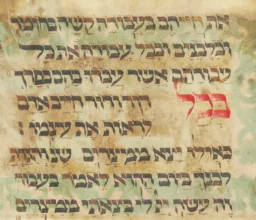
  • Detail of Lauder Haggadah

    In every Generation

    In Passover by Calev Ben-Dor

    The phrase “in every generation” appears in two different places in the Hagaddah, but with two very different meanings: “In every generation” they rise up to destroy us, and the Holy One, Blessed be He, delivers us from their hands. But we are also told that “in every generation” we are to liberate ourselves from slavery, which means that we’re also obligated to relieve ourselves of any hate, and fear, towards those who wronged us. Those two “in every generations” clash. Too much focus on one the first (our enemies) undermines our ability to do the second (overcoming hate). Emphasizing the second (no hate) may dull our senses to the reality of the first.

  • Finding Meaning in the Book of Job

    In Jewish Thought and Philosophy by Calev Ben-Dor

    About nine years ago, the 929 project was launched. Similar to (but much easier than) Daf Yomi, individuals study one chapter of Tanach a day five days a week, completing the entire cycle in 929 days (3.5 years). Those engaged in it are currently learning the Book of Job, which offers us wisdom in these trying times. 

  • The Merit of Isaac’s Ashes

    In Theodicy and Parashat Vayera by Calev Ben-Dor

    The theme of ashes, (efer / עפר) plays a role in two stories in this week’s parsha. Abraham uses the term when entering into negotiation with God to spare the city of S’dom. The other mention of ashes is in the Akeida, where Abraham is commanded to take his beloved son Isaac to Mount Moriah and offer him as an olah, a burnt offering. The story not only fascinated traditional commentators but modern Israeli and Zionist thinkers too. What does this story mean for us today?

  • Escaping the Luxury of Powerlessness: A cautionary tale

    In Purim by Calev Ben-Dor

    A curious midrash on the Megillah examines the attraction - and dangers - of exile. The powerlessness of exile can free us from the difficult moral decisions of sovereignty. But this freedom from guilt comes at the price of our ability to control our circumstances.

  • When God is Mute – Interpretation and honesty in reading texts

    In Theodicy and Parashat Beshalach by Calev Ben-Dor

    Is it appropriate to sing God's praises, when God is utterly silent to our distress? Jewish tradition has addressed the question in different ways throughout history. Some of these answers may be helpful to us, living through a period that includes both unimaginable lows and historic highs.

  • The Tragedy of Moshe Rabbenu’s Fight for Justice

    In Theodicy and Parashat Shemot by Calev Ben-Dor

    Moshe was a warrior for justice. On three separate occasions, he fought for justice for others. He was simply unable stand idly by when he saw suffering. But this very inability to countenance injustice was also the source of Moshe's greatest tragedy.

  • Questions in Light of a Palace in Flames

    In Theodicy by Calev Ben-Dor

    We have become used to thinking of the diaspora as a place of danger; Israel of safety. The fact the biggest murder of Jews in one day since the Holocaust took place in Israel is simply unfathomable. The question is inevitable: Where was God? A strange Midrash on this week's parashah may hint at an answer.

  • A Thought on Tisha Be’Av

    In Tisha B’Av by Calev Ben-Dor

    A few years ago, Israeli academic Amnon Rubinstein wrote 'The Sea above us,' a fictional tale in which Tel Aviv, Israel’s first Hebrew metropolis, lies under water. In an interview with Ari Shavit, the author explained the idea behind his novel, describing his deep ‘existential anxiety that our country is hanging by a thread, that one day it may simply cease to be. I haven’t read the book, but I admire Rubenstein and share his anxiety about the future