
Yael Shahar

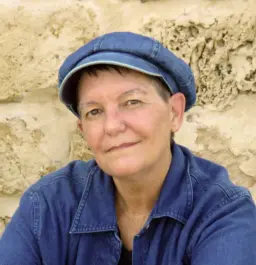
Yael Shahar spent most of her career in intelligence and security studies, with side trips into physics, graphic design, and digital layout.

She has lectured worldwide on a variety of topics, from Jewish education to security studies and threat assessment. Her research on the Internet as an enabler of political and social change led her to a deeper study of Jewish society over the ages.

Her writing on Jewish education and philosophy can be found at www.yaelshahar.com.

  • Free Will and Confirmation Bias – A lesson for our times

    In Parashat Bo by Yael Shahar

    One of the more perplexing aspects of the Exodus story is the repeated “hardening” of Pharaoh’s heart. This phrase—together with another that is equally mysterious—is the key to understanding the true miracle of the Exodus. Virtually every encounter with Pharaoh involves a dialog between two key concepts: the hardening of the heart is paired with God’s showing Pharaoh, the Egyptians, or the Israelites “that I am Hashem.” Why is it so important that the Egyptians learn the mysterious name of God? Surely the primary target for this lesson would be the Israelites themselves! The solution to both questions is bound up in the true miracle of the Exodus—and it isn’t what we commonly think!

  • Yaakov's funeral procession

    Knowing the Way Home – Yaakov’s high-stakes gamble

    In Parashat Vayechi by Yael Shahar

    What is behind Yaakov's sudden adoption of Yosef's two sons? And why does he make Yosef swear to bury him in the land of Canaan? Is his son's word not enough? It seems that Yaakov--or rather, Yisrael--is once more taking the helm of the family, and he is about to hatch his most daring plot of all!

  • A Light on the Threshold: The unwritten message of Hanukah

    In Hanukkah by Yael Shahar

    To the question “What is Hanukkah?” the Talmud doesn't give us the answer we expect. We're told only that when the victorious Maccabees rededicated the Temple, the sole remaining jar of ritually pure olive oil for the menorah sufficed for eight days. Why no mention of the military victory over vastly superior forces and the resurrection of an independent Jewish state? Why does the Talmud leave so much out?

  • Yaakov's ladder

    Yaacov’s Dream – The encounter with uncertainty

    In Parashat Vayetzei by Yael Shahar

    In this week's parashah, Yaakov has his first vision of the God of his ancestors. It is significant that this encounter finds him in a state of vulnerability, a state of uncertainty. It is uncertainty that clears the way for us to accept the miracle of the encounter.

  • The Gaza War and the Challenges of Statehood

    By Yael Shahar

    In the weeks ahead, Israel will be facing one of the hardest tests a nation ever has to face, and it isn’t what we might think. The test is not to stay strong under the threat of rockets fired at our population centers, nor of repelling vicious incursions from across our borders, nor even of standing against the hatred of the nations when we fight back. The war now facing the State of Israel poses a greater challenge, and that is to hold on to the high moral standards that have sustained us since Israel’s founding. We must ensure that we do not become the very thing that we are fighting against.

  • Truth, Compromise, and Meta-Halakhah

    In Halacha and Jewish Thought and Philosophy by Yael Shahar

    The Talmud manages to do what few legal systems even attempt: it integrates psychological and moral issues seamlessly with normative legal guidelines. But to appreciate the full extent of this integration, it's important to pay attention to something that is too often left out of today's Gemara classes: the aggadah.

  • Two New Podcasts: On the Jewish Mission and the Most Difficult Mitzva

    In Jewish Thought and Philosophy by Yael Shahar

    Dear Friends, Shalom u-vracha. Although we have received several new gifts, for which we are most thankful, our financial situation has still not been resolved. The unfortunate “witch hunt” against some of my ideas seems to continue and has created much financial damage to our programs, projects and writings. As I have stated before, I […]

  • The Revival of the Dead & the Miracle of Return

    The full text of Rabbi Nathan Lopes Cardozo’s Afterword to Returning

    In Holocaust and Jewish Thought and Philosophy by Yael Shahar

    Rabbi Cardozo speaks of the implications of resurgent memory in our day. Could this be the fulfillment of prophetic vision?  He notes that stories of non-lived memory are more common than we think. “Such stories hint at a great secret about the age we are living in now. But not everyone connects the dots in the […]

  • Returning

    A story of memory and redemption

    In Holocaust and Jewish Thought and Philosophy by Yael Shahar

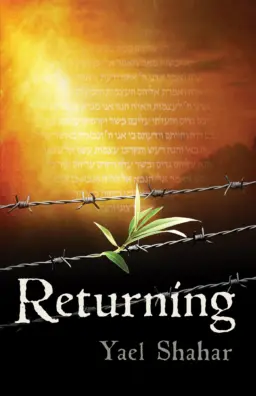
    How far will one man go to attain forgiveness? Alex died in Auschwitz, having betrayed his faith and his people. Now he’s been given a single miraculous chance to put things right—but his fate is in the hands of a woman who only wants to forget, and a rabbi who isn’t sure whether to be […]

  • Reflections and Resources on Teshuvah

    In Holocaust and Jewish Thought and Philosophy by Yael Shahar

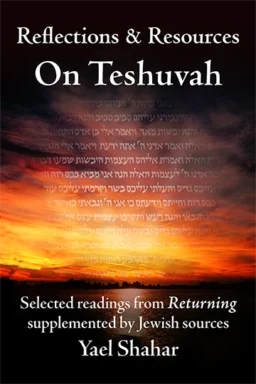
    This discussion guide explores some of the difficulties and dilemmas facing those who seek to heal the wounds of their own souls—especially self-inflicted wounds. These topics are explored through a series of dialogues between Ovadya ben Malka, former member of the Birkenau Sonderkommando and Rabbi David Ish-Shalom. The discussion topics are supplemented with sources from Jewish texts and sample questions. Foreword by Rabbi Dr. Nathan Lopes Cardozo.

  • Innovative Halakhic solutions already exist: Do we have the courage to use them?

    In Halacha by Yael Shahar

    In the process of adapting from exile to statehood, halachah may need to be uprooted and transplanted, or even cut back to its deepest roots and regrown in a larger pot, where it can flower more freely. This will probably result in the “secularization” of some of our halachot, offset by a cultural “Judification” of our secular society. Can we use the lessons learned during the galut to survive in an increasingly decentralized and globalized world?