Jewish Thought and Philosophy

To think Jewishly is to stand at the edge of certainty and still choose to believe, question, and seek. Jewish thought lives in the tension between faith and doubt, law and freedom, eternity and change.

  • The In-Authenticity of Codifying Jewish Law

    In Halacha, Jewish Thought and Philosophy, Maimonides and The Ishbitzer by Rabbi Nathan Lopes Cardozo

    Halacha is the practical upshot of unfinalized beliefs, a practical way of life while remaining in theological suspense. In matters of the spirit and the quest to find God, it is not possible to come to final conclusions. The quest for God must remain open-ended to enable the human spirit to find its way through trial and discovery.

  • What makes a “spiritual experience”?

    In Jewish Thought and Philosophy by Yael Valier

    What turns a spiritual experience into a religious one is the training and preparation that creates a religiously shaped receptacle for an experience or at least a religious vector for channeling the experience.

  • The Bet Midrash of Avraham Avinu – Lectures and the Academy

    In Education and Jewish Thought and Philosophy by Rabbi Nathan Lopes Cardozo

    To live a life of faith is to be prepared to live a committed religious life according to an inner belief of the heart and not because there is absolute empirical certainty. There is a constant need for questioning and rethinking one’s beliefs. In many ways, religion must be warfare—a fight against the indolence and callousness that stifles inquiry.

  • The Bet Midrash of Avraham Avinu: The Wonder of Judaism

    In Jewish Thought and Philosophy by Rabbi Nathan Lopes Cardozo

    The breaking of idols and slaughtering of sacred cows is, in itself, a Jewish task that began with Avraham Avinu. Consequently, we should not be afraid to do so, or at least to discuss the possible need for change. This could raise some eyebrows in certain religious circles, and we might even become controversial. So, we must keep in mind that great controversies are also great emancipators. They often clarify and enhance essential philosophies behind majestic traditions.

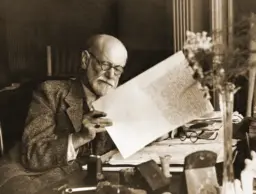
  • Freud’s Subconscious Discovery of God

    In Jewish Thought and Philosophy by Rabbi Nathan Lopes Cardozo

    Jewish tradition teaches that man was created in God’s image. Whatever this may mean, it definitely includes the fact that God created man in such a way that man, in desperate need to discover himself, would constantly search for Him. Freud, we believe, gave a most original interpretation of this fact. With his discovery of the father figure he may have uncovered the mechanism through which God created an idea of Himself as the ultimate Father in the human mind.

  • The Modern Day Inquisition against Rabbi Joseph Dweck

    A Tragic Story of Rabbinical Small-mindedness

    In Jewish Thought and Philosophy and Spinoza by Rabbi Nathan Lopes Cardozo

    When Orthodox rabbis are told that they are no longer able to speak their minds, offer new insights into Orthodox Judaism, or try to find solutions to serious problems by using innovative ideas, we are faced with a rabbinical world that is wearing blinders, is comprised of yes-people looking over their shoulders, and is generating a hazardous small-mindedness that has far-reaching effects.

  • Speaking Lashon HaRa about the World

    In Jewish Thought and Philosophy and Parashat Shelach by Rabbi Nathan Lopes Cardozo

    Is the world truly getting worse—or are we simply choosing to see it that way? Like passengers in a moving elevator, we mistake motion for meaning and darkness for truth. This essay challenges us to reconsider the way we look at the world—and to rediscover the quiet, overwhelming goodness we have learned to ignore.

  • The Ban on Circumcision

    Blatant Anti-Semitism and Ignorance

    In Circumcision and Jewish Thought and Philosophy by Rabbi Nathan Lopes Cardozo

    What gives us the right to bring a child into a religious covenant by way of circumcision, without his consent? On the other hand, what right do we have to bring children into the world without giving them a higher mission?

  • In Defense of Rav Soloveitchik – A Response to Rabbi Cardozo

    In Education, Halacha and Jewish Thought and Philosophy by Yael Shahar

    A sharp critique of Rabbi Cardozo’s views, arguing that his analysis of Rav Soloveitchik is mistaken and reflecting broader resistance to his reinterpretations of traditional Orthodox thought.