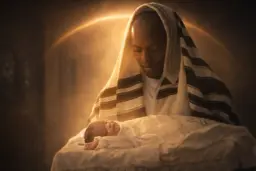
God said to Avraham, “And you shall keep My covenant, you and your seed after you throughout their generations.
Bereshit 17:9
Thousands of years ago, the Greeks tried to bring an end to Judaism and, thereby, to the Jewish people. They did this by prohibiting Jews from circumcising their eight-day-old baby boys.[1] On May 6, 2017, the Progress Party in Norway voted in favor of a law banning ritual circumcision of children under the age of 16. The so-called reason: “violation of children’s rights,” and “mental and physical harm” to the child.
This was done a day after the environment committee of Belgium’s Parliament of Wallonia voted in favor of banning shechita (kosher ritual slaughter). In both cases, these verdicts, although not yet implemented by the Norwegian and Belgian governments, are a serious attempt to ban Jews not only from these countries but from all of Europe.
In 2013, the Parliamentary Assembly of the Council of Europe recommended to all its 47 member states to ban circumcision.
Throughout thousands of years, we Jews have become used to these attacks. We realize that much of this was and is motivated by antisemitism and a great amount of ignorance. We laughed it off and went our way, knowing that nothing or nobody in this world could force us to stop circumcising our children. We were well aware that giving up the sign of the covenant would bring an end to our people. No self-respecting Jew would lend a hand to these ill-conceived attacks.
Lately, however, some Israeli Jews have joined forces with those attempting to ban circumcision. They’ve established websites such as “Gonen al ha-Yeled” (protect the child), and organizations such as “Kahal” (a support group for parents of uncircumcised children, and undecided parents who want to consult with them). While the number of uncircumcised children in Israel is minimal, the fact that these groups have been established is a worrisome phenomenon.
Humanitarian considerations
It is impossible to argue with anti-Semites, since they are motivated by hatred, and no reasoning will change their minds. On the other hand, it is most important to realize that many well-meaning Jews (and gentiles) are deeply influenced by so-called “humanitarian” considerations, and begin wondering whether attempts to ban the practice are, after all, justified.
Indeed, there is a valid question to be asked. Is it not an infringement on the rights of a child, who never consented to this intervention to circumcise him? And, in truth, is it not a harmful and traumatic experience? Perhaps all the parties who want to ban circumcision are right, after all?
What these well-meaning people, especially Jews, have to realize is that the whole premise on which these objections are based is the result of a profound misunderstanding of what human beings are all about, what moves them, and what makes their lives meaningful.
To be truly alive is possible only when one lives for some supreme goal. The ultimate question regarding our lives is whether there is anything worth dying for.[2] If the answer is no, then we must ask ourselves whether there is anything to live for. For most thinking people, there is more to life than our physical survival, or having a good time. It is the exaltation of existence and the ability to hear a perpetual murmur of the waves beyond the shore of worldliness that give us the feeling of life’s utmost significance. If not for that, we would agree with French philosopher and novelist Albert Camus, who said that the only serious philosophical problem is whether or not to commit suicide.[3]
There are values in life that surpass our concern for the mundane, and many of us are prepared to make highly uncomfortable — even painful — sacrifices in order to live by those values. It is these sacrifices that give our lives a notion of belonging, of being part of something much larger than the sum of the components that make up our physical existence.
We ask: What gives us the right to bring a child into a religious covenant, by way of circumcision, without his consent? Circumcision, after all, is the very sign of belonging to the Jewish people. And to be Jewish means to be part of a nation that is rooted in a covenant that asks Jews to risk their very existence for the sake of a moral and religious mission — to redeem humankind from its moral setbacks and to offer it hope. How can we commit children to a lifelong mission that they may not wish to fulfill? Fair questions, indeed!
By what right do we bring children into the world?
But shouldn’t we really be asking a different question — a question that we may not want to face? What right do we have to bring children into the world without giving them a higher mission? Is there anything more heartless than giving birth to children and not letting them know why they live? What right do we have to throw children into this turbulent jungle, filled them with anxieties and uncertainties, without giving them a clue as to their higher purpose? While Socrates explained that the unexamined life is not worth living, Judaism teaches us that a life without commitment is a life not lived. The dignity of a person is in direct proportion to his or her obligations.[4] All human beings — Jews and gentiles alike — need to teach their children a strong commitment to a meaningful purpose beyond the mere mundane. Just the pleasure principle is not enough.
To deny our children this is to withhold from them true joy, and the capability to withstand major challenges, as well as the chance to experience the highest, truest value of living in this world. Joy is “man’s passage from a less to a greater perfection,” said Baruch Spinoza.[5] But it is only through hardship and discomfort that one can achieve such perfection.
Surely children will always have the opportunity to reject the individual missions chosen for them by their parents, and replace them with other callings. Yet, it is of invaluable importance for their parents to make them aware of the fact that without a mission, life is not worth living.
When we object to circumcision on the basis of child mutilation (a description completely disproportionate to a small incision that takes only a few seconds, heals within hours, and has no serious consequences), or the basis that we are denying the child’s right to autonomy over his body, it could seem that we are making a valid claim. Indeed, by what right are we, as parents, allowed to make this decision for him? But shouldn’t we also ask ourselves honestly whether we have the right to bring a child into this world at all? Is that not a much greater injustice than circumcision?
After all, even with today’s advanced medical knowledge, many children are tragically born with all sorts of deformities or illnesses, often crippled and handicapped for life. Others may suffer at some later stage in life, contracting diseases, experiencing violence, and even becoming victims of war and other atrocities.
Has anyone, before planning birth, ever asked their future child for consent to be born? Should we ban all future pregnancies and births, as we now want to do with circumcision?
Subconsciously, we all know that we have the right to bring a child into the world because there is something about life that overrules all objections against it. If we did not believe this, it would be completely prohibited to risk bringing children into the world, knowing full well how much harm and pain they will most probably encounter. As Samuel Butler humorously said. “To live is like to love — all reason is against it, and all healthy instinct for it.” [6]
Only if we understand that life is of invaluable importance — and not merely a matter of physical survival — can we live a life of grand spiritual import.
One of the greatest tragedies of modern times is that millions of people live and die without ever being aware that there is supreme meaning to their lives.
Rights and duties
Closely related to this is the issue of rights and duties. Western society is rights-oriented, and secular ethics is deeply rooted in this distinction. One of the great contributions that Judaism — and to a certain extent other religious denominations — has made to this world is the concept of duty. This is an essential distinction that cuts across many issues. Judaism does not believe that people own their bodies, and are therefore free to do with them whatever they please. Judaism, and most monotheistic religions, believe that the human body is a loan granted by God, Who is the ultimate Owner.
Parents, therefore, have the responsibility to convey to their children a purpose in life, which must reflect the notion of obligation. For the same reason, it is not a human right to bring children into the world; it is a duty. If it is seen as merely a right, what happens when the rights of the parents clash with those of the child? When parents abort a healthy fetus because they have the right to do so, are they not violating the right of the child to be born?
The rite of circumcision is the Jews’ way of passing on life’s meaning to their children, by obligating them to fulfill the Jewish people’s covenant with God, sealed thousands of years ago. It is duty we talk about, and there is no growth except in the fulfillment of one’s duties.
For Jews, circumcision — the promise to live life with a great mission as its guide — is God’s seal imprinted on human flesh. And it is only proper that this sign of allegiance be imposed upon the body, for after all, it is not the soul that needs to make the commitment. The soul is already committed to its mission. It is the body — the very instrument through which one carries the soul, enabling one to live a life of nobility — that makes a vow to compel itself to serve God.
Like a piece of paper that carries the buying power of a certain dollar amount, the body serves as the vessel that holds the soul. Abraham Joshua Heschel noted that, just as the symbolic markings on the bill inform us of the value assigned to it by the treasury department, so too does the “sign” that parents inscribe on the bodies of their children reveal the greatness of the souls they house.
Since Judaism strongly believes in action and the physical, not only in faith and spirituality, the transient act of baptizing with water is insufficient. Judaism wants the body to be transformed. And if the body fails to live up to its lofty responsibilities, the physical imprint of the circumcision serves as a constant reminder of what it means to reside in the presence of God; it is a testimony to one’s spiritual obligations and potential. The claim that it may hurt for a moment, and that it interferes with the child’s self-determination, is totally disproportionate to its infinite spiritual value. The child, from the very beginning of his life, is physically and symbolically reminded that living a life of higher meaning requires sacrifice, but is also the source of both ultimate happiness and the notion of mission.[7]
A sense of mission
Medical science has not yet determined whether circumcision has medical advantages. According to many medical experts it has, but arguing about this is missing the point. Circumcision has nothing to do with medical advantages. It has to do with the meaning of life and its higher purpose.
But what about all the Jews who are no longer religious and have abandoned Judaism? Why should they continue to circumcise their children?
The famous arch-critic of Judaism, Baruch Spinoza, provides a surprising answer: “The sign of circumcision is, I think, so important that I could persuade myself that it alone would preserve the nation forever.” [8] What this great philosopher was arguing is that Jews may reject Shabbat, kashrut and Judaism at large, but as long as they circumcise their children, they will preserve their nation from utter oblivion, because they realize that it stands at the core of Jewishness, and represents a good deal more than just a religious rite or the belief in God.
Circumcision is an event that exists as a moment in the past, yet extends into the future. From a human perspective, circumcision happens just once; but from the perspective of mission, the message conveyed by this act — the Jewish nation’s unwavering commitment either to God, ethics, or Jewishness — resounds forever. Monuments of stone may disappear; acts of the spirit will never vanish.
From a religious perspective, at the time of circumcision, parents imprint God’s seal on the body of their child, thus bringing him into the covenant with God, and with human meaning. From that moment, the child begins his journey on the road of commitment to holiness which, although not yet known to him, is the most challenging and rewarding mission life can offer — to become a servant of God and a blessing to all nations.
The miracle of Jewish survival
As Spinoza, who had left behind his Jewishness, so correctly observed, circumcision is the secret to the miracle of Jewish survival. What those Jews who oppose circumcision should never forget is that the attempt to outlaw this rite would not only make Jewish life impossible, but would probably end all Jewish existence. Banning circumcision in Europe would mean that Jews living there would need to immigrate to Israel, but banning circumcision in Israel would mean an end the State of Israel as the national homeland of the Jewish people. This would be more than tragic. It would bring an end to all the great contributions to civilization that Jews have made throughout thousands of years, and continue to make, thanks to the State of Israel. These contributions are grossly disproportionate to the percentage of Jews in the world population and are most miraculous. To abandon circumcision is not only to undermine the very existence of the Jewish people; it is also a great injustice to all of humankind.
As Winston Churchill once said, “Some people like Jews and some do not; but no thoughtful man can doubt the fact that they are beyond all question the most formidable and the most remarkable race which has ever appeared in the world.” [9]
The remarkable capacity of the Jewish nation to outlive all its enemies — from the Egyptians to the Greeks, Romans, Persians… and down to the Nazis — may quite well be the result of this small physical intervention. It takes a few seconds, but it creates eternity.
Questions to Ponder from the DCA Think Tank
- Rabbi Cardozo frames the debate on circumcision as one of human rights versus human moral duties. Even as he builds the case for circumcision, are not secular states built on the right to apply their own moral codes? If a Jew wants to circumcise their baby, aren’t there other countries, including Israel, in which to do this?
- Kashrut too is framed as a debate on animal rights versus the duty to eat only meat that has been ritually slaughtered. As with circumcision, there is a “victim” of religious ritual. To what extent should a secular state weigh in to protect those without a voice?
- On questions 1 & 2, is there a middle ground which allows for both sides of the debate?
- In matters of ultimate religious value or mission, what limits or guidelines, if any, would you impose? Based on what criteria?
- Rabbi Cardozo derides the description of circumcision as mutilation as “completely disproportionate to the small incision that takes only a few seconds, heals within hours, and has no serious consequences.” Do you think that the term mutilation should be reserved for major operations? Or could any physical operation, inflicted without consent and of questionable health benefit, qualify as mutilation? Why?
- Why do you think Europe is up in arms against circumcision, but indifferent to the piercing of the ears of little babies and children for nothing more important than their decoration?
Notes
[1] See Peter Schäfer, Judeophobia: Attitudes Toward the Jews in the Ancient World (Cambridge, MA: Harvard University Press, 2009), chap. 5, “Circumcision.” .
[2] Abraham Joshua Heschel, Who Is Man? (Stanford, CA: Stanford University Press, 1965), 92.
[3] Albert Camus, The Myth of Sisyphus, trans. from the French by Justin O’brien (New York: Penguin Books, 1979), 11.
[4] Abraham Joshua Heschel, God In Search of Man: A Philosophy of Judaism (NY: Farrar, Straus and Cudahy, 1955), 216.
[5] Benedict de Spinoza, Ethics, part III, “Definitions of the Emotions.” .
[6] Samuel Butler, Erewhon and Erewhon Revisited, (Mineola, New York: Dover Publications, 2015), 270 .
[7] See J.D. Levenson, “The New Enemies of Circumcision,” Commentary, March 2000. There Levenson discusses the reason why women do not have a sign like brit milah.
[8] Benedict de Spinoza, A Theologico-Political Treatise, chap. 3 in The Chief Works of Benedict de Spinoza, trans. R.H.M. Elwes (London: G. Bell and Sons, 1883), vol. 1.
[9] Winston Churchill, “Zionism Versus Bolshevism: A Struggle for the Soul of the Jewish People” Illustrated Sunday Herald, February 8, 1920, p. 5.