
Jewish Thought and Philosophy

To think Jewishly is to stand at the edge of certainty and still choose to believe, question, and seek. Jewish thought lives in the tension between faith and doubt, law and freedom, eternity and change.

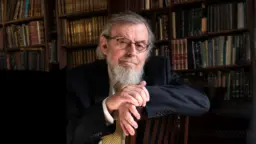
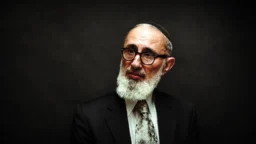
  • The Legacy of Rav Soloveitchik

    In Jewish Thought and Philosophy by Yehuda DovBer Zirkind

    In evaluating Rabbi Cardozo's critique of Rav Yoseph Dov Soloveitchik, it is important to clarify that Rabbi Cardozo criticizes Rav Soloveitchik from the perspective of the burning issues that are important to Rabbi Cardozo (i.e. changes in Halacha, daring theological approaches etc.), and it should not be seen as a general evaluation of Rav Soloveitchik's philosophical legacy as a whole.

  • An open letter to Rabbi Cardozo in response to his article on Rav Soloveitchik

    In Jewish Thought and Philosophy by The Cardozo Academy

    Tanya White responds to Rav Cardozo's critique of Rav Joseph B. Soloveitchik's lack of innovation in the Halachic realm. She argues that for many reasons the Rav was halachically strait jacketed. He felt a strong obligation to the tradition of his fathers and perhaps felt it was too early to depart from or radically reinterpret thousands of years of Halachic stringencies and inertia. However, he laid the path for those after him to do the work. His insistence on women’s learning especially of Gemara was an opening of doors for the developments we see today.

  • Rabbi J.B. Soloveitchik and his Paradoxical Influence

    In Halacha and Jewish Thought and Philosophy by Rabbi Nathan Lopes Cardozo

    While I greatly admire Rabbi Soloveitchik’s essays such as The Lonely Man of Faith, I wonder why he never addressed some of the issues that keep many people away from Orthodoxy, such as the issue of Torah Min HaShamayim and Bible criticism. It may be true that the Rav avoided the issue of Bible criticism out of principle. But if so, then he was out of touch with reality. At the time, Bible criticism was a major topic of discussion, as it still is. This subject is of utmost importance, and if anyone could have dealt with it head-on it was the Rav.

  • Musings on Rav Soloveitchik’s Torah

    In Jewish Thought and Philosophy by The Cardozo Academy

    Rabbi Joseph Ber Soloveitchik thought is greatly indebted to Kantian philosophy. In contenting himself with the philosophical world of Kant, JBS shows himself to be thoroughly unmodern in his philosophical approach to halacha.

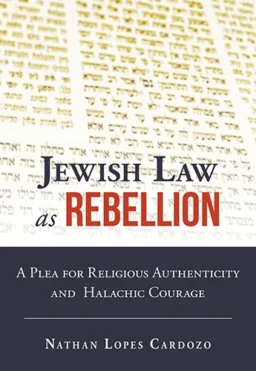
  • Jewish Law as Rebellion

    A Plea for Religious Authenticity and Halachic Courage

    In Halacha and Jewish Thought and Philosophy by Rabbi Nathan Lopes Cardozo

    In this remarkable and highly controversial book, Rabbi Nathan Lopes Cardozo suggests that Jewish Law must be seen as a discipline of resistance and courage. Rebelling against the rabbinical establishment, Rabbi Cardozo takes it to task for failing to liberate Halacha from its stagnancy and confinement. With ground-breaking suggestions, Jewish Law as Rebellion shows how to make Jewish Law once again relevant to our modern society and to the State of Israel.

  • The Unknowable, Loving, and Aggravating God

    In Jewish Thought and Philosophy and Parashat Va'era by Rabbi Nathan Lopes Cardozo

    Judaism declares that emotions are what make a person; they are real and of crucial importance. In fact, emotions are central to a person’s existence, since they are the foundation of moral behavior. It is for this reason that Judaism views God as an emotional Being. By metaphorically attributing emotions to God, they are raised to a supreme state. If God has emotions such as love, mercy, jealousy and anger, then they must be genuine, important, and not ignored when found in humans.

  • The Deliberately Flawed Divine Torah

    Torah min Hashamayim?

    In Jewish Thought and Philosophy and Maimonides by Rabbi Nathan Lopes Cardozo

    I believe that the Torah is min hashamayim (“from heaven”) and that its every word is divine and holy. But I do not believe that the Torah is (always) historically true (sometimes it seems like Divine fiction), or that it is uninfluenced by external sources.

  • Reflections and Resources on Teshuvah

    In Holocaust and Jewish Thought and Philosophy by Yael Shahar

    This discussion guide explores some of the difficulties and dilemmas facing those who seek to heal the wounds of their own souls—especially self-inflicted wounds. These topics are explored through a series of dialogues between Ovadya ben Malka, former member of the Birkenau Sonderkommando and Rabbi David Ish-Shalom. The discussion topics are supplemented with sources from Jewish texts and sample questions. Foreword by Rabbi Dr. Nathan Lopes Cardozo.

  • Halacha and the Inadequacy of Jewish Dogma

    In Education and Jewish Thought and Philosophy by Rabbi Nathan Lopes Cardozo

    The difference between dogma and faith is like the difference between a word spoken and a word set to music. Faith is the refutation of human finality. It transforms dogma into something untouchable and gives man entry into the imponderable.

  • Faith and Truth: A necessary trade-off?

    In Halacha and Jewish Thought and Philosophy by The Cardozo Academy

    Our relationship with God as we know it is not just about what we think or understand. There is also a faith that is not based in intellectual belief. This is a faith that is based on our own inner resonance with the practices and beliefs of our tradition. What happens to our emotional faith when our intellectual faith runs up against facts that seem to contradict that faith? How do we keep our balance?

  • Wanted: Rabbis with Knives between Their Teeth

    The Need for a Genuine Upheaval

    In Education and Jewish Thought and Philosophy by Rabbi Nathan Lopes Cardozo

    The land and State of Israel was never and can never be the goal of the Jewish people. It is a means to carry out a great mission, and unless we rediscover and accept this calling, Israel will eventually collapse.