Thoughts to Ponder

Thoughts to Ponder is a weekly invitation to think dangerously and question passionately. Drawing on the Torah portion, classical Jewish sources, philosophy, and the crises of contemporary life, Rabbi Cardozo challenges religious complacency and spiritual comfort. These essays are written for readers who seek a Judaism that disturbs, questions, and ultimately deepens the human encounter with God and responsibility.

  • Parashat Bereshit: The First Divine Commandment is to Enjoy the World

    In Jewish Thought and Philosophy and Parashat Bereshit by Rabbi Nathan Lopes Cardozo

    It is often thought that God’s first commandment to Adam was the prohibition regarding the Tree of Knowledge. This would mean that man’s first encounter with the will of God was a negative experience: a restriction. However, this isn't actually true: This was not the first commandment! Careful analysis of the text shows that the first commandment to Adam and Chava was to eat from all the other trees and enjoy them.

  • Rosh Hashana, Yom Kippur

    The Curse of Indifference

    In Rosh Hashanah and Yom Kippur by Rabbi Nathan Lopes Cardozo

    Our greatest challenge is that, living under miraculous conditions through no merit of our own, we fall prey to the curse of indifference--indifference to the miserable and impossible situation of our fellow humans who are threatened by suffering and death.

  • Humor, Rosh HaShana, and the Impossible Shofar

    In Rosh Hashanah by Rabbi Nathan Lopes Cardozo

    It is Divine humor that tells us to live with absurdity, and supreme holy witticism that asks us to live with laughter. We are asked to enjoy the journey and realize that there is no arrival.

  • The Map Problem and the Fly

    In Jewish Thought and Philosophy by Rabbi Nathan Lopes Cardozo

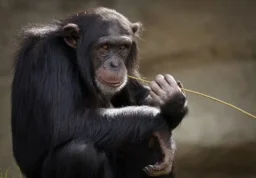
    Some have said that only what can be proven is of value. True, if we limit ourselves to that which can be proven, we run less risk of error, and yet, by limiting ourselves so, we also run the risk of missing out on that which is most important. After all, the things that bring us the greatest meaning are those very things that cannot be proven.

  • The Temple Sacrifices and the Meaning of Life

    In Jewish Thought and Philosophy, Rav Kook, Parashat Vayikra and Tisha B’Av by Rabbi Nathan Lopes Cardozo

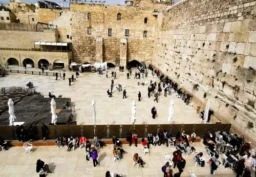
    Regardless of the many traditional approach to offering sacrifices in our day, there is no question that the Temple and its rituals once played an enormous role in Judaism, and that offering sacrifices was at the very center of its holy service. So, what was it that made sacrifices such an essential part of Judaism in bygone times? Was it merely primitivism? Or was it something that we are no longer connected to today and are missing out on? What holiness could there have been in the offering of sacrifices? And were we to discover this holiness, would that mean we should reintroduce the sacrificial rites in our own contemporary times?

  • Belief in the Hereafter

    In Jewish Thought and Philosophy by Rabbi Nathan Lopes Cardozo

    Is belief in an afterlife a fundamental tenet of Jewish faith? I personally believe that a human being’s life does not come to an end with death, but I do not believe that this is a fundamental tenet of our faith. In fact, I believe that to consider this as such harms the integrity of Judaism.

  • God as an Idol: The tragedy of being religious

    In Jewish Thought and Philosophy by Rabbi Nathan Lopes Cardozo

    It’s high time that we who consider ourselves religious have an honest look in the mirror and ask ourselves what brought us to this lifestyle. Was it a genuine longing for religion and mitzvah observance, or was it an insurance policy?

  • The War between Israel and Hamas

    By Rabbi Nathan Lopes Cardozo

    When a nation looses its sense of mission it turns against those who remind them of it. All too often, it is the Jewish nation that earns their hatred with their moral demands and teachings. As a result, these countries call for the destruction of this annoying nation. Its voice, reflecting the One Above, has to be silenced so that the uncertainty of these countries’ conscience and the reality of their guilt can be obliterated.

  • Afterthoughts on the Pandemic: the Black Spot or the White Page?

    In Jewish Thought and Philosophy by Rabbi Nathan Lopes Cardozo

    The purpose of genuine religious life is to protest against this optical illusion and to teach us to refocus our spiritual spectacles. It is not that religion shows us something new. Rather, it shows us what we have seen all our lives but have never noticed, that there is dazzling goodness in this world. There is order instead of chaos; there is diversity, not just monotonous existence; and above all, there is the infinite grace of the human deed.

  • Moshe’s Failure to Educate God

    In Moses and Parashat Va'era by Rabbi Nathan Lopes Cardozo

    Who is the Eternal, that I should listen to His voice to let Israel go? I know not the Eternal and moreover I will not let Israel go. Shemot 5:2 When reading the story of the Ten plaques, one gets the impression that there is something absurd about the story. Why should Pharaoh listen to […]