Thoughts to Ponder

Thoughts to Ponder is a weekly invitation to think dangerously and question passionately. Drawing on the Torah portion, classical Jewish sources, philosophy, and the crises of contemporary life, Rabbi Cardozo challenges religious complacency and spiritual comfort. These essays are written for readers who seek a Judaism that disturbs, questions, and ultimately deepens the human encounter with God and responsibility.

  • The Unforgettable “Sinterklaas”: A tongue-in-cheek look at a remarkable tradition

    By Rabbi Nathan Lopes Cardozo

    This week, the festival of Sinterklaas will take place in my birthplace of Holland. This festival made an indelible impression on my childhood, and there is much we can learn from the dilemmas it raised (and still raise) for Jewish educators.

  • The Upcoming Post-Corona Crisis – Part 1

    By Rabbi Nathan Lopes Cardozo

    Is the failure of many parts of the Chareidi community to observe the coronavirus regulations a symptom of a deeper underlying problem? Is a spiritual malaise lurking behind their behavior? I believe we must approach this pandemic from a global perspective – far beyond the Jewish community itself.

  • In Memory of Lord Rabbi Jonathan Sacks z.l. – A man of faith & defiance

    In Jewish Thought and Philosophy by Rabbi Nathan Lopes Cardozo

    With the demise of Rabbi Sacks, world Jewry as never before, has to ask itself how it can produce Rabbis on the level of Rabbi Sacks so that Judaism can continue to be a world player.

  • The Paradox of Shabbat

    In Parashat Tetzaveh and Parashat Vayakhel by Rabbi Nathan Lopes Cardozo

    On six days work should be done, but on the seventh day you shall have a Sabbath of complete rest, holy to the Eternal . . . You shall kindle no fire throughout your settlements on the Sabbath day. Shemot 35:1-2 Why is it that the Book of Shemot records the command by God to […]

  • The Command That Came Too Late

    In Parashat Vayakhel by Rabbi Nathan Lopes Cardozo

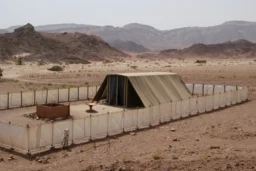
    The command to build the Mishkan (Tabernacle) was a huge mistake. Not because it was not a brilliant idea, but because it came too late!

  • The Absurdity of Yom Kippur

    The Confrontation with Our Undeserved Lives

    In Yom Kippur by Rabbi Nathan Lopes Cardozo

    Yom Kippur leads us to realize life itself is a gift and that gifts confer obligations. The more we receive, the more we become obligated to respond adequately.

  • Rosh Hashana: Daring to Blow New Life into Judaism

    In Rosh Hashanah by Rabbi Nathan Lopes Cardozo

    The blowing of the shofar proves that we can surpass ourselves. On our own, using only our vocal cords, we are unable to produce this sound—a terrifying, awesome, penetrating resonance. This is a sound that can cause us to break down, pick ourselves up again, and transform ourselves into new individuals.

  • Musical notes

    Bach, Mozart, and Beethoven: How to be a Genuine Halachic Expert

    In Halacha, Jewish Thought and Philosophy and Parashat Yitro by Rabbi Nathan Lopes Cardozo

    To be an arbiter of Jewish law is to be the conductor of an orchestra. It is not coercion but persuasion that makes it possible for the other to hear the beauty of the music and to accept a halachic decision, just as one would willingly listen to the interpretation of a conductor—because one is deeply inspired.

  • Musical notes

    Who can be Mashiach? He who knows how to sing!

    In Jewish Thought and Philosophy and Parashat Ha'azinu by Rabbi Nathan Lopes Cardozo

    Music raises the spoken word to a level that touches on prophecy. It gives it a taste of that which is beyond, and transforms it into something untouchable. Just as there is no way to demonstrate the beauty of music to a person who is completely deaf, so is there no way to explain the difference between a spoken word and one which is sung, unless one sings. It lifts a person out of the mundane and gives him a feeling of the imponderable, which is the entrance to joy. It sets the soul in operation and brings us near to the Infinite.

  • Jerusalem light rail

    Some Bold Ideas

    How to Observe Shabbat, take the Tram and go to a Restaurant!

    In Halacha and Shabbat by Rabbi Nathan Lopes Cardozo

    It is clear a greater number of secular Israelis would like to become more observant. However, for various practical reasons, or due to social pressures, they are unable to make this switch. One of the great challenges, if not the greatest, is Shabbat, the only official day of rest in Israeli society, when people enjoy visiting people, or meeting friends at a restaurant. But none of this is possible without the use of cars or taxis and with no open restaurants. Here are some suggestions to overcome these obstacles