Jewish Thought and Philosophy

To think Jewishly is to stand at the edge of certainty and still choose to believe, question, and seek. Jewish thought lives in the tension between faith and doubt, law and freedom, eternity and change.

  • The Temple Sacrifices and the Meaning of Life

    In Jewish Thought and Philosophy, Rav Kook, Parashat Vayikra and Tisha B’Av by Rabbi Nathan Lopes Cardozo

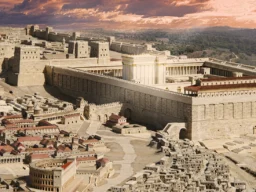
    Regardless of the many traditional approach to offering sacrifices in our day, there is no question that the Temple and its rituals once played an enormous role in Judaism, and that offering sacrifices was at the very center of its holy service. So, what was it that made sacrifices such an essential part of Judaism in bygone times? Was it merely primitivism? Or was it something that we are no longer connected to today and are missing out on? What holiness could there have been in the offering of sacrifices? And were we to discover this holiness, would that mean we should reintroduce the sacrificial rites in our own contemporary times?

  • Why does Jewish Law forbid religious images?

    In Jewish Thought and Philosophy by Rabbi Nathan Lopes Cardozo

    When scientists describe or teach about atoms and electrons they use models and images on the blackboard or computer screen.  However, these are but metaphors and symbols; no one believes them to be the real thing. Why then, does Jewish Law forbid images that are meant to represent God, even when we know these images are only metaphors?

  • Is God Really of Supreme Importance?

    In Jewish Thought and Philosophy by Rabbi Nathan Lopes Cardozo

    Is God really of supreme importance? The answer affects the way one lives, behaves, and perceives life. A believing person claims that he lives in the palace of the King of all Kings; if one lives in this palace, one must behave as befits royalty, and it is religion’s task to give us the guidelines as to how to do this.

  • Is believing in God the same as believing that He exists?

    In Jewish Thought and Philosophy by Rabbi Nathan Lopes Cardozo

    Is there a difference between believing in God and believing that God exists? Might belief in God imply that we not only believe that He exists but that we trust Him?

  • Belief in the Hereafter

    In Jewish Thought and Philosophy by Rabbi Nathan Lopes Cardozo

    Is belief in an afterlife a fundamental tenet of Jewish faith? I personally believe that a human being’s life does not come to an end with death, but I do not believe that this is a fundamental tenet of our faith. In fact, I believe that to consider this as such harms the integrity of Judaism.

  • The Philosophy and Purpose of Thoughts to Ponder

    In Jewish Thought and Philosophy by Rabbi Nathan Lopes Cardozo

    In my Thoughts to Ponder I have tried to touch on issues that were ignored or even denied in the religious Jewish community, often because these challenged conventional religious notions that I felt needed more attention and a different approach.

  • God as an Idol: The tragedy of being religious

    In Jewish Thought and Philosophy by Rabbi Nathan Lopes Cardozo

    It’s high time that we who consider ourselves religious have an honest look in the mirror and ask ourselves what brought us to this lifestyle. Was it a genuine longing for religion and mitzvah observance, or was it an insurance policy?

  • Afterthoughts on the Pandemic: the Black Spot or the White Page?

    In Jewish Thought and Philosophy by Rabbi Nathan Lopes Cardozo

    The purpose of genuine religious life is to protest against this optical illusion and to teach us to refocus our spiritual spectacles. It is not that religion shows us something new. Rather, it shows us what we have seen all our lives but have never noticed, that there is dazzling goodness in this world. There is order instead of chaos; there is diversity, not just monotonous existence; and above all, there is the infinite grace of the human deed.

  • The Upcoming Post Corona Crisis – Part 6: Talmudic Rainbows

    In Jewish Thought and Philosophy by Rabbi Nathan Lopes Cardozo

    What is the Talmud all about? The first thing that must be emphasized is that the Talmud displays deliberate chaos. It roams from one topic to another without any real inner logic, other than that one word gives rise to a whole new idea without warning us that it is coming. The outsider may have trouble making heads or tails of it all. And then suddenly one gets the hang of it and realizes that all this chaos flows together into an unbelievable picture, with hundreds of colors harmoniously coming together. That moment of comprehension is a great joy for the intellect and the human soul.

  • Truth, Compromise, and Meta-Halakhah

    In Halacha and Jewish Thought and Philosophy by Yael Shahar

    The Talmud manages to do what few legal systems even attempt: it integrates psychological and moral issues seamlessly with normative legal guidelines. But to appreciate the full extent of this integration, it's important to pay attention to something that is too often left out of today's Gemara classes: the aggadah.

  • Rav Kook & Aggadata

    Aggadah and the Tragedy of “Secularism” in Religious Jewish Education

    The Upcoming Post Corona Crisis - Part 5

    In Halacha, Jewish Thought and Philosophy and Rav Kook by Rabbi Nathan Lopes Cardozo

    In returning the prophetic spirit to Judaism, the world of Aggadah is of crucial importance. Aggadah is the prophetic voice within Judaism, where prophecy not only speaks, but allows the reader to answer. It is the part of Judaism that deals with the sum total of human life. It prevents mechanical observance by freeing our inner spirit. Whereas Halacha is the consummation, Aggadah is its aspiration.

1 5 6 7 8 9 20