
Jewish Thought and Philosophy

To think Jewishly is to stand at the edge of certainty and still choose to believe, question, and seek. Jewish thought lives in the tension between faith and doubt, law and freedom, eternity and change.

  • Introduction (Part 2)

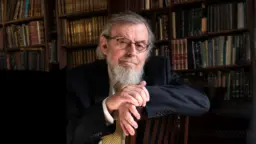
    In Jewish Thought and Philosophy by Rabbi Nathan Lopes Cardozo

    Judaism has taught me that external experiences are of little importance when they remain trivialities. However, when these trivialities can be transformed into ways in which one can meet God, then the finite becomes infinite.

  • Introduction (Part 1)

    In Jewish Thought and Philosophy by Rabbi Nathan Lopes Cardozo

    This new extensive autobiography, divided into short chapters, is not a book of memoirs, but a window into my soul. Besides the request to write it, it was also an assignment I had to undertake because an inner voice told me to do so. I could not escape the challenge.

  • Musical notes

    Bach, Mozart, and Beethoven: How to be a Genuine Halachic Expert

    In Halacha, Jewish Thought and Philosophy and Parashat Yitro by Rabbi Nathan Lopes Cardozo

    To be an arbiter of Jewish law is to be the conductor of an orchestra. It is not coercion but persuasion that makes it possible for the other to hear the beauty of the music and to accept a halachic decision, just as one would willingly listen to the interpretation of a conductor—because one is deeply inspired.

  • Musical notes

    Who can be Mashiach? He who knows how to sing!

    In Jewish Thought and Philosophy and Parashat Ha'azinu by Rabbi Nathan Lopes Cardozo

    Music raises the spoken word to a level that touches on prophecy. It gives it a taste of that which is beyond, and transforms it into something untouchable. Just as there is no way to demonstrate the beauty of music to a person who is completely deaf, so is there no way to explain the difference between a spoken word and one which is sung, unless one sings. It lifts a person out of the mundane and gives him a feeling of the imponderable, which is the entrance to joy. It sets the soul in operation and brings us near to the Infinite.

  • The Perfect Torah Versus The Evolving Torah – Part 7

    In Jewish Thought and Philosophy and The Ishbitzer by Yehuda DovBer Zirkind

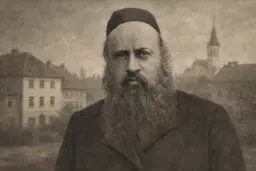
    This is the last of a seven-part series on the thoughts of the Mei HaShiloach, the famous and highly unusual work by the Chassidic thinker, Rabbi Mordechai Joseph Leiner of Izbica. In this essay, Yehuda DovBer Zirkind discusses how the ideas of Mei HaShiloach may impact the future evolution of halachah. Many observations by the Mei HaShiloach touch on my opinion that Halacha will have to liberate itself from what we can only call “Defensive Halacha,” which became the norm while the Jewish people were living in exile.

  • The Perfect Torah versus The Evolving Torah

    The Philosophy of The Mei HaShiloach and Its practical Consequences

    In Jewish Thought and Philosophy and The Ishbitzer by Yehuda DovBer Zirkind

    This is the sixth part of our discussion on the philosophy of the Chassidic thinker, Rabbi Mordechai Yosef Leiner of Izbica, author of the Mei HaShiloach, a most unusual work which in many ways goes far beyond the established norms of orthodox Halacha as we know it today. Yehudah DovBer Zirkind continues to discuss Rav Cardozo's observations, and adds much important information and insights of his own.

  • The Perfect Torah Versus the Evolving Torah – Part 5

    In Jewish Thought and Philosophy and The Ishbitzer by Yehuda DovBer Zirkind

    The Mei HaShiloach’s highly unusual teachings are becoming more and more relevant in our days, as we face greater challenges to Halacha and the Jewish lifestyle. Among these challenges are the establishment of the State of Israel, numerous religious crises, and the challenge of modernity. Can Halacha—which can no longer rely on the strict adherence to its rules, but gets more and more dependent on its ideological and spiritual message and spirituality—guide us in the future?

  • The Perfect Torah Versus the Evolving Torah – Part 4

    In Jewish Thought and Philosophy and The Ishbitzer by Yehuda DovBer Zirkind

    In these trying times, it is of great value to focus on spiritual matters that may move us to a different plain. This will give us comfort, broaden our minds and enlarge our souls, as we carefully follow all the health regulations prescribed by our authorities. Here is the fourth part of Yehudah DovBer Zirkind’s reflections on the ideas of the Mei HaShiloach and my own comments.

  • The Message of The Corona Virus

    In Jewish Thought and Philosophy by Rabbi Nathan Lopes Cardozo

    The new reality in the age of COVID-19 forces us to break with the monotony that most of us are used to. Almost all of us jump into routine every morning – whether it’s a job, or the need to sleep, eat, or entertain ourselves. And now, the corona virus suddenly forces us to rethink everything, making us wonder what this life of ours is really all about.

  • The Perfect Torah Versus the Evolving Torah – Part 3

    In Jewish Thought and Philosophy and The Ishbitzer by Yehuda DovBer Zirkind

    The two different approaches to the Torah: the “perfect Torah” and the “evolving Torah” approaches are related to a broader theological question about the nature of the mitzvot: Do the mitzvot reflect God’s ultimate and unconditional will (kvayachol), or do they reflect God’s instrumental will for humanity, providing an instruction manual for how to redeem the world? In other words, is the main purpose of the mitzvot for the sake of God (i.e. that humankind should fulfill God’s wishes) or for the sake of man (i.e. that God’s plan for humanity should be realized)?

  • The Perfect Torah versus the Evolving Torah – part 2

    In Jewish Thought and Philosophy and The Ishbitzer by Yehuda DovBer Zirkind

    The giving of the Torah has radically altered the course of Judaism and we cannot revert to a pre-Torah age. Nevertheless, Rabbi Cardozo believes that the vision and spirit of this formative era, i.e. the vibrancy of an inchoate and incipient Judaism - or to borrow a metaphor from biology, a “stem cell” based Judaism - should be kept alive and maintained as a counterweight against the ethos of textual fixation and rigid Halachic codification which is so prevalent within the contemporary Orthodox Jewish world.