
The Upcoming Post-Corona Crisis – Part 2
In Jewish Thought and Philosophy by Rabbi Nathan Lopes Cardozo
COVID-19 has highlighted the weaknesses of our ideologies, both religious and secular, to provide meaning to our lives.
To think Jewishly is to stand at the edge of certainty and still choose to believe, question, and seek. Jewish thought lives in the tension between faith and doubt, law and freedom, eternity and change.
In Jewish Thought and Philosophy by Rabbi Nathan Lopes Cardozo
COVID-19 has highlighted the weaknesses of our ideologies, both religious and secular, to provide meaning to our lives.
In Jewish Thought and Philosophy by Rabbi Nathan Lopes Cardozo
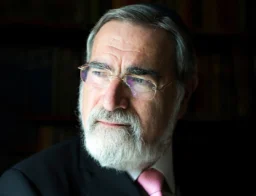
With the demise of Rabbi Sacks, world Jewry as never before, has to ask itself how it can produce Rabbis on the level of Rabbi Sacks so that Judaism can continue to be a world player.
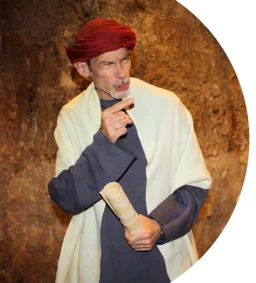
In the context of the launch of a new theater company whose mission is to bring entertaining theological content to audiences in and around Jerusalem, Roy Doliner’s Divine Right was chosen as the company’s first production. This play about the Disputation of Barcelona balances historical accuracy and creative dramatic content in a satisfying and intellectually honest portrayal of the events of the Disputation for educated lay audiences. This paper examines the technical, dramaturgical, and theological issues that arose during this production for the playwright, director, actors, and audiences.
In Jewish Thought and Philosophy by Rabbi Nathan Lopes Cardozo
Music touches the otherwise untouchable and intangible within us. It soars toward the infinite. When I listen to music, I feel like my feet are lifted off the ground and my soul is extracted from my body and starts to live a life of its own. There is no way to “prove” this feeling of transcendence, just as love cannot be proven. It belongs to an entirely different realm.
In Jewish Thought and Philosophy by Rabbi Nathan Lopes Cardozo
While the Greek narrative focuses on “seeing,” the biblical perspective focuses on “hearing” the deeper internal dimension that eludes the naked eye.
In Jewish Thought and Philosophy by Rabbi Nathan Lopes Cardozo
I am taking the reader through the uncharted territories I traversed during my voyage of discovery. Only after I have taken the reader through the many mountains and valleys will I be able to reflect on my journey as a whole and attempt to articulate my holistic re-visioning of Judaism. I am guided by the Talmudic method of argumentation where ideas are raised and discussed; sometimes these ideas are accepted, while other times, they are rejected. There are instances where a final determination is never reached. At other times, the debate might suddenly continue many pages later or may even resume unexpectedly in a different Talmudic tractate altogether. It is in this spirit that this contemplative Autobiography is written.
In Jewish Thought and Philosophy by Rabbi Nathan Lopes Cardozo
After living in the Orthodox community for some years, I became deeply disturbed by the fact that many Orthodox Jews were not spiritual in the slightest. They were secular Jews who happened to be observant. These were all very nice people, but they were guilty of religious plagiarism. One religious day was identical to the previous day, without any new encounter with the Divine and the Torah. Everything was “under control,” to the point that any novel spiritual and intellectual struggle was completely absent. But most disturbing was my realization that I myself had become guilty of this!
In Jewish Thought and Philosophy by Rabbi Nathan Lopes Cardozo
Judaism has taught me that external experiences are of little importance when they remain trivialities. However, when these trivialities can be transformed into ways in which one can meet God, then the finite becomes infinite.
In Jewish Thought and Philosophy by Rabbi Nathan Lopes Cardozo
This new extensive autobiography, divided into short chapters, is not a book of memoirs, but a window into my soul. Besides the request to write it, it was also an assignment I had to undertake because an inner voice told me to do so. I could not escape the challenge.
In Halacha, Jewish Thought and Philosophy and Parashat Yitro by Rabbi Nathan Lopes Cardozo
To be an arbiter of Jewish law is to be the conductor of an orchestra. It is not coercion but persuasion that makes it possible for the other to hear the beauty of the music and to accept a halachic decision, just as one would willingly listen to the interpretation of a conductor—because one is deeply inspired.
In Jewish Thought and Philosophy and Parashat Ha'azinu by Rabbi Nathan Lopes Cardozo
Music raises the spoken word to a level that touches on prophecy. It gives it a taste of that which is beyond, and transforms it into something untouchable. Just as there is no way to demonstrate the beauty of music to a person who is completely deaf, so is there no way to explain the difference between a spoken word and one which is sung, unless one sings. It lifts a person out of the mundane and gives him a feeling of the imponderable, which is the entrance to joy. It sets the soul in operation and brings us near to the Infinite.
In Jewish Thought and Philosophy and The Ishbitzer by Yehuda DovBer Zirkind
This is the last of a seven-part series on the thoughts of the Mei HaShiloach, the famous and highly unusual work by the Chassidic thinker, Rabbi Mordechai Joseph Leiner of Izbica. In this essay, Yehuda DovBer Zirkind discusses how the ideas of Mei HaShiloach may impact the future evolution of halachah. Many observations by the Mei HaShiloach touch on my opinion that Halacha will have to liberate itself from what we can only call “Defensive Halacha,” which became the norm while the Jewish people were living in exile.