
Jewish Thought and Philosophy

To think Jewishly is to stand at the edge of certainty and still choose to believe, question, and seek. Jewish thought lives in the tension between faith and doubt, law and freedom, eternity and change.

  • Man thinking about meaning

    The Meaning of Life, Depression and The Red Heifer

    In Jewish Thought and Philosophy and Parashat Chukat by Rabbi Nathan Lopes Cardozo

    Depression is one of the worst conditions a human being may suffer. There are several reasons for the occurrence of depression. One that is very common results from feeling that life is meaningless. Combined with the fact that nobody can escape death, some people experience life as very painful. They do not suffer from anything […]


  • Hebrew Bible pages words

    The Holiness of Words

    In Jewish Thought and Philosophy by Rabbi Nathan Lopes Cardozo

    Man alone was endowed with the gift of words and the ability to connect thereby with his Creator. Language can comprise grandeur, while it can also be emptied of its value and essence. How we choose to live our lives affects how we express ourselves and the language we use. The debasing of language today stems from and represents unfortunate moral and ethical decay.

  • Image: newborn holding parent's hand

    Contemplating Childbirth and Divine Revelation

    In Jewish Thought and Philosophy by Rabbi Nathan Lopes Cardozo

    Contemplating Childbirth and Divine Revelation: Have you ever thought about these? When a child is born, the first question that should come to mind is: When he or she grows up, what should we tell them about the importance of their birth and the purpose of their life? After all, what right do we have […]

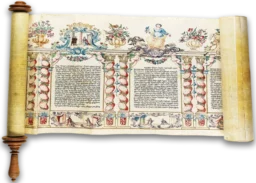
  • Scroll of Esther

    Megillat Esther: Attaining the Level of Non-Acquaintance

    In Jewish Thought and Philosophy and Purim by Rabbi Nathan Lopes Cardozo

    Attaining the Level of Non-Acquaintance—Pseudo-Dionysius, the Areopagite   The most discussed topic in philosophy of the Middle Ages is, without doubt, God’s existence. Many great philosophers such as Rambam (Maimonides, 1138-1204) and the Christian thinker Thomas Aquinas (1225-1274) invest a lot of time in clarifying the concepts of “omnipotence,” “divine excellence” and other such terminologies.[1] […]

  • Horizin through filter

    Panic: The Visible and Invisible

    In Halacha and Jewish Thought and Philosophy by Rabbi Nathan Lopes Cardozo

    Genuine religiosity is demanding - it requires a sensitivity to the physical human condition as well as the hidden, divine dimension. Living in a manner that combines the visible and the invisible, and more so, harmonizing the two as equal components of our lives, is a tremendous challenge. It is too easy to make a selection - as many individuals and even religions do - between the visible and invisible, preferring one over the other. However, living the one with an imbalance regarding the other is not what Judaism teaches.

  • Open Bible - Navi (Prophets)

    The Struggle to Teach Real Torah

    In Jewish Thought and Philosophy by Rabbi Nathan Lopes Cardozo

    Despite my many years of experience (and successes), I have felt that something crucial has been missing - which I identified recently: Am I merely conveying knowledge, or do I stand before my students as someone who is entirely imbued with the significance, import and sanctity of the words I utter? God requires of His prophets and those who speak His words to be true and just, and to live His words with every fiber of their beings!

  • children smiling

    The Art of Smiling

    In Jewish Thought and Philosophy by Rabbi Nathan Lopes Cardozo

    A kippah - and every other aspect of dress required by the Halakhah - pose a tremendous challenge! I am constantly aware of how I am to strive to achieve and implement the values that my kippah requires of me - both when I stand before God, and also in the way I face the world. Facing my fellow, my conduct, and even the countenance I assume are spheres that my kippah relates to!

  • Youth with white kippah

    Fearing My Kippah

    In Jewish Thought and Philosophy by Rabbi Nathan Lopes Cardozo

    I have a serious dilemma. As I am getting older (I am currently 76, thank God), I am becoming more and more afraid of my kippah. Let me tell you why: I am not sure I have the right to wear a kippah. Although today it is considered an obligation to wear a kippah, it […]

  • Smiling baby

    Birth and Death – The Ultimate Paradox

    In Jewish Thought and Philosophy and Parashat Tazria by Rabbi Nathan Lopes Cardozo

    Speak to the Israelite people thus: When a woman at childbirth bears a male, she shall be impure seven days; she shall be impure as at the time of her condition of menstrual separation. Vayikra 12:2 Giving birth to a child creates a paradox. On the one hand, it is the greatest joy we can […]

  • Menora

    Chanukah: The Art of Balancing

    In Jewish Thought and Philosophy by Rabbi Nathan Lopes Cardozo

    The menorah of Chanukah, sometimes called the chanukiah, has its roots in the menorah of the Temple. While there are many halakhot (laws) regarding the appearance and structure of the biblical menorah, Rashi, the great French commentator, points to a most remarkable halachic feature. Regarding the instruction to arrange the lamps so that they will […]