For I the Eternal am your God: you shall sanctify yourselves and be holy, for I am holy. You shall not make yourselves impure through any swarming thing that moves upon the earth.
Vayikra 11:44
The legend is told by Clearchus, a pupil of Aristotle, that the famous Greek philosopher had great respect for the Jewish tradition — and especially for its strict diet.[1]
This came to mind when I read that a rabbinical court in Boston had declared grapes picked by immigrant workers to be not kosher.[2] How could this be? After all, vegetables are — by definition — kosher.
Later, I was informed that certain rabbinical personalities had declared specific shoes and other items made of leather to be “not kosher.” And then I read about a deeply religious young man who refused to wear perfectly Halakhic Tefillin (phylacteries) because they were made of leather.
Were all of these mere stringencies, or was something else going on? It turns out that the reason the grapes were deemed not kosher was because the immigrant workers were mistreated and underpaid. In the case of the leather shoes, it was because these shoes were made of baby seals who were clubbed to death. And the deeply religious young man refused to wear the Tefillin because they had been made from leather from animals that had been cruelly slaughtered. He requested Tefillin made from the skin of kosher animals that had died naturally.
Suddenly the legend about Aristotle takes on a more profound meaning.
What is Kashrut
The term “kosher,” (literally, “appropriate” or “fit”; in the context of food, permitted under Judaism’s dietary laws) has gained international renown. The word appears in nearly all dictionaries; one can request kosher food on most airlines — whether flying to Peking, Tokyo or Dubai.
I even know of non-Jews who eat only kosher! I once suggested to them that they propose to their gentile friends to also start asking for kosher meat as a protest against countries that tried to ban the sale of kosher meat and poultry, claiming Jewish slaughter (shechita) is cruel. Shechita is by far the most painless and most humane method of animal slaughter! A worldwide protest against attempts to ban shechita would probably have some positive effect.
And yet, I ask myself: Why do we Jews need to eat kosher? Why does the Torah not instruct the gentile world to do the same? In the past I had been told that the reason for eating kosher is because it is healthier. While this may be the case, it only strengthens the question. After all, Jewish law, does propose basic laws for non-Jews, so why aren’t non- Jews obligated to maintain the kosher dietary laws as well?
The rationale for eating solely kosher does not appear anywhere in the Torah. The only “justification” provided is that weare to be holy (Kadosh) since God is holy (Vayikra 11:45).
But what is Kedushah — “holiness”? In general, the term is used to express a higher spiritual and moral life, where the mundane is not rejected but is elevated to a refined level of ethical living.
In the instance of kashrut (the entire sphere of the dietary laws), holiness means that by refusing to eat the flesh of certain animals — whether mammal, fowl, or fish — one distances oneself from certain “low” characteristics symbolized by these animals, such as animals that are predators — that live by violence. Some commentators take this literarily: Der Mensch is was er est, human beings are what they eat. In other words: nurture shapes nature.
Other commentators see the laws as purely symbolic.
A step in the right direction
But eating kosher food is not sufficient. It is only a step in the right direction.
According to the Torah, human beings were originally told not to consume any meat; only plants were permitted. Animals were created for their own sakes and to assist human beings, not for consumption. This was the original Divine plan. Permission to consume meat was granted to Noah and his family, only after the flood, the cause of which was human corruption. Was this due to scarcity of food at that time? Was it perhaps meant to be only a temporary concession? We don’t know. But the Torah tells is us that the human lifespan declined radically at the same time; instead of human beings living as much as 800-900 years, now they would generally live no longer than 120 years!
It is clear, in any case, that permission to eat meat was a compromise owing to the spiritual weakness of man. Humans had fallen from their high moral standards before the flood, and they were no longer able to live without the consumption of meat. However, the animals were to be slaughtered in a manner that is as painless as possible, and the consumption of an animal’s blood remained entirely forbidden as before.
The great compromise
We are told that God chose Avraham and his family to restart a movement of ethical behavior, which would then go on to teach humankind to “love justice and compassion”. At the revelation at Sinai, Avraham’s descendants were inducted into a slow process that would eventually bring humankind back to the high ethical standards that existed prior to the flood. The Torah is not the end of the road of monotheistic ethics, but only its first step.
Thus, the ethical mission of the Jewish People is to help humankind to return to the original Divine plan. Jews are meant to set an example of higher ethical standards — including the way animals are slaughtered, and how meat is consumed. But this too is only the first step, for all these laws are but a compromise on the way to the ultimate goal of vegetarianism, as in the days before Noah. Jews are obligated to observe these dietary laws while at the same time educating others to voluntarilyundertake their observance, until eventually the whole world will return to a vegetarian diet.
Thus, the dietary laws form a “ladder” of ethical improvement. All living things — whether animals, fish or fowl — that we are allowed to consume are in fact only “semi-kosher,” because their consumption is really a compromise. True kashrut would mean a vegetarian diet! For the meantime, this “food of compromise” is still permitted.
But for how long? Even animals that are slaughtered as the law requires are often mistreated prior to slaughter. As agribusiness has grown, it becomes impossible to deal with animals as gently as demanded by Jewish Law.
Now that we are able to create artificial meat, it may well be the time has come for us to truly become vegetarians. This will not be an easy transition, but one that is highly necessary.[3]
Kashrut is a process of moving from a lower level of refinement to a higher level. But even when we claim that we are eating in a kosher manner, we should not claim that we have achieved the ultimate aim of kashrut, which is holiness. We have only taken the first step.
Questions to Ponder
- Do you feel that you are truly keeping kosher if the products that you eat depend on the suffering of others? If so, what other everyday choices and practices might fall under the rubric of kashrut? Would groceries bought from a store that underpays or mistreats its staff be kosher?
- What do you think of the idea that the purpose of kashrut is to achieve holiness by distancing oneself from “low” characteristics symbolized by certain animals? Are there other aspects of life where similar principles should be applied to attain holiness? What are the implications of adhering strictly to such symbolic interpretations versus more literal ones?
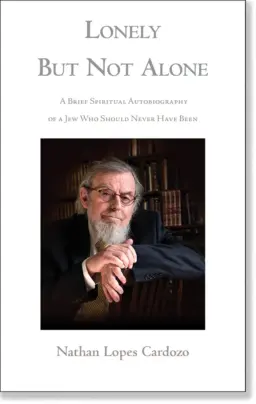
- Rabbi Cardozo suggests that Jews are to set an example for the world, eventually leading all of humanity back to a vegetarian diet. How feasible is the universal application of kashrut principles, and what are the philosophical and practical challenges in advocating for such a global shift? Can such a universal ethical standard be justified, and if so, how?
- With the advent of artificial meat, eating a strictly vegetarian diet may become feasible even for those who eat meat on a daily basis. Would this meat automatically be considered kosher? Do you see such technological developments as a fulfillment of the original goal of the kashrut laws? Or does the self-discipline required to keep the laws of kashrut, and the effort needed to apply the laws serve communal and spiritual purposes that cannot be fulfilled if keeping kosher becomes “too easy”?
Notes
[1] See Torah Today, Pinchas H Peli, B’nai Berith Books, Washington, 1987 Also see Kaufmann Kohler, Louis Ginzberg, “Aristotle in Jewish Legend”, The Jewish Encyclopediahttps://www.jewishencyclopedia.com/articles/1774-aristotle-in-jewish-legend.
[2] “NY Board of Rabbis Urging Jews to Join Grape Boycott,” The Sentinel, 10 July 1969.
[3] I no longer eat meat except for humanely handled and carefully slaughtered chicken so as not to make it too difficult for my dear wife by becoming a complete vegetarian I am waiting for the day that artificial meat will be freely available.