To think Jewishly is to stand at the edge of certainty and still choose to believe, question, and seek. Jewish thought lives in the tension between faith and doubt, law and freedom, eternity and change.
While we've had to fight physical battles to ensure our survival, we must never lose sight of the fact that existence would be meaningless if not for the nation’s spiritual purpose.
The Sensitivity of the Torah and the Power of Language
Two main expressions used for prophecy are "Zeh Hadavar," "This is the word," and "Koh Amar Hashem," "Thus says God." Why these two different expresssions?
It is with great pain that I write about the demise of one of the great rabbinical figures of our generation, Rabbi Bezalel Rakov z.l. who headed a small settlement of deeply religious Jews in the city of Gateshead in the north of England.
At an ever increasing rate, we are starting to see revolutionary changes appearing in our world that no one would have even considered contemplating a few years ago. Suddenly, we realize that we are walking through the door of a new epoch before we even thought to ring the bell.
If anyone were to argue that traditional Judaism is guilty of too much dogma and not enough imaginative thought, a closer look at the multitude of rabbinical insights into the meaning of “God” and “revelation” would quickly disabuse him of such a notion.
One of the most disturbing claims ever made by any group of people is the one Jews make when, quoting the Bible, they insist upon being called the "Chosen People." What does this even mean?
"Now, write this Song for Yourselves and Teach It". A song however is different from a mere inheritance. It is the result of being overwhelmed by something which touches the deepest level of one's soul. It is the speechlessness of the lips which carry the song to the ineffable. An authentic song is therefore a protest against words getting frozen.
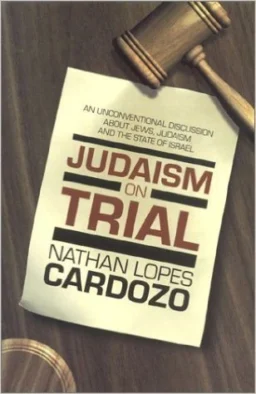
Judaism on Trial
An Unconventional Discussion about Judaism, Jews and the State of Israel
Arguing that science and anti-religious philosophy are not responsible for the decline of Judaism, Rabbi Cardozo says it is those who teach it that make Judaism appear irrelevant to the needs and problems of modern man. Jewish law and custom are taught as a dogmatic creed and no longer contains the exciting spontaneity of worship, while remaining formalistic, replacing love with habit. Instead, the author believes that Judaism must reflect deep compassion to recapture the flowing fountain of a glorious tradition-if not, all becomes meaningless. The author is dean of the David Cardozo School for Jewish Studies and Human Dignity.
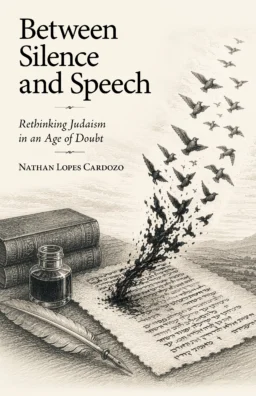
In Between Silence and Speech, Rabbi Nathan Lopes Cardozo confronts the questions that thoughtful readers often hesitate to ask. Rather than defending tradition with easy answers, Rabbi Cardozo challenges both religious complacency and secular certainty, revealing Judaism as a living intellectual and spiritual adventure.