A Personal Encounter with the Divine
In Jewish Thought and Philosophy by Rabbi Nathan Lopes Cardozo
There are moments in life when one is confronted with divine intervention. Thoughts on the loss of a great woman.
To think Jewishly is to stand at the edge of certainty and still choose to believe, question, and seek. Jewish thought lives in the tension between faith and doubt, law and freedom, eternity and change.
In Jewish Thought and Philosophy by Rabbi Nathan Lopes Cardozo
There are moments in life when one is confronted with divine intervention. Thoughts on the loss of a great woman.
In Franz Rosenzweig, Jewish Thought and Philosophy and Parashat Noach by Rabbi Nathan Lopes Cardozo
Contemplation about the mitzvot without actually fulfilling them makes one deed-deaf. The profound meaning of a mitzvah may only be understood by experiencing it.
Tentative Thoughts Towards a Jewish Religious Renaissance
In Halacha and Jewish Thought and Philosophy by Rabbi Nathan Lopes Cardozo
The monograph is meant to explain the purpose and ideology of the David Cardozo Academy and is based on the Academy's inaugural lecture given in September, 2005.
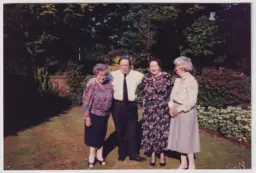
A Tribute to Abraham Lopes Cardozo z.l.
In Jewish Thought and Philosophy by Rabbi Nathan Lopes Cardozo
A Tribute to Abraham Lopes Cardozo z.l. While fully involved in the world, he taught us that spiritual nobility is a thousand times more valuable than all what the great secular world has to offer us.
In Jewish Thought and Philosophy, Rav Kook and Parashat Mishpatim by Rabbi Nathan Lopes Cardozo
All humans are fundamentally children of the time in which they live. It is hard, if not altogether impossible, for most people to think beyond their own limitations. It is the commonplace that stands out and holds sway over most of our thinking. To think outside the box requires courage, broad thinking and daring creativity.
Jewish Thoughts for a Complex World
In Halacha and Jewish Thought and Philosophy by Rabbi Nathan Lopes Cardozo
Crisis, Covenant and Creativity deals with some of the most widely discussed issues in contemporary Jewish religious life.
In Converting to Judaism, Jewish Thought and Philosophy and Shavuot by Rabbi Nathan Lopes Cardozo
As long as Judaism is taught as merely a luxury, something extraneous to life, it will be of little importance in the eyes of those who are asked to become Jewish. But when we teach it as being indispensable, it will become life itself and will make waves in the souls of all those we approach.
In Jewish Thought and Philosophy by Rabbi Nathan Lopes Cardozo
It is an artform to live as if every moment is new, a challenge, and an encounter with the Divine.
In Jewish Thought and Philosophy by Rabbi Nathan Lopes Cardozo
Faith is one of the most difficult attributes to acquire. To have faith in God has become a struggle for many human beings, including those who are desperately looking for it. In modern times with their tendency to secularize nearly anything, the man of faith often feels alone in a world in which religious beliefs are often looked down on.
In Abraham, Jewish Thought and Philosophy and Parashat Vayera by Rabbi Nathan Lopes Cardozo
For the biblical personality and those living in early post-biblical times, the existence of God was apparent. One would discover His fingerprints everywhere: in heaven, on earth, in the colors of a flower, in the stormy sky, in the thunder and lightning, in the smile of a baby or the beauty of the seashore.
In Jewish Thought and Philosophy by Rabbi Nathan Lopes Cardozo
The question to what extent one can actually trust God and rely on His protection is closely related to the question why He created the world. It should be claimed that one can only rely on His protection and help as long as this does not contradict the very purpose of existence.
In Jewish Thought and Philosophy by Rabbi Nathan Lopes Cardozo
We established in part III of "The Struggle for Faith" that it is forbidden to trust in God when this trust contradicts God's purpose for the world. Since man must have the possibility of exercising freedom of will, there must be a natural order to the world. If not for the laws of nature, it would not be possible for man to make any moral decision, since he would never be able to know what the consequences of his decisions would be.