ויאמר משה כה אמר יהוה כחצת הלילה אני יוצא בתוך מצרים
Shemot 11:4
Moshe said, “Thus said the Eternal, ‘Toward midnight, I will go out into the midst of Egypt’
The Torah uses several expressions for prophecy. Two phrases that appear frequently in this regard are, Zeh Hadavar (This is the word) and Koh Amar Hashem (Thus says God.)
We find an example of the former in Bamidbar, where the Torah teaches the laws related to making vows. “And Moshe spoke to the heads of the tribes of the children of Israel and said, ‘This is the word that God has commanded: if a man makes a vow . . . ’”[1] An example of the latter occurs in our Parashah, where Moshe informs the people that the promised redemption from the hardships of Egyptian slavery is imminent. “Thus says the Lord, ‘At about midnight I will go out into the midst of Egypt.’”[2]
Rashi offers the following comment on the verse in Bamidbar:
Moshe prophesied with “Koh Amar Hashem” (Thus says God) and the prophets prophesied with “Koh Amar Hashem”. Moshe, however, added [another kind of prophecy] with the words, “Zeh Hadavar” (This is the word).
Rabbi Eliyahu Mizrachi (circa 1440-1525), in his classic commentary on Rashi, explains that this subtle difference in the language hints at the unique nature of Moshe’s prophecy. The Talmud observes that with the exception of Moshe Rabbenu, the Jewish prophets experienced communication from God be-aspaklaria she’ena me’ira — via an obscured lens, which means that they received prophecy only while in trances or in dreams.[3] Only Moshe received his prophecies at all times, even while fully conscious.[4] He achieved a spiritual level on which nothing stood between him and God. Thus, we say that Moshe’s prophesy came to him be-aspaklaria ha-me’ira — through a clear lens.
Through a glass darkly
If this interpretation is correct, then the expression, Koh amar Hashem — “Thus says God” — somehow implies a prophecy revealed through an “obscured lens.” Commentators point out that this kind of prophecy does not have to be transmitted as a literal word-for-word repetition of the divine communication.[5] Koh Amar Hashem actually means “This is about what God said,” while Zeh Hadavar should be understood to mean, “This is the exact word”. In order to explain Rashi’s aforementioned comment (from which we learn that Moshe prophesied using both expressions) Rabbi Mizrachi argues that before Moshe received the special gift of prophecy which was uniquely his (i.e. the clear lens) he prophesied on the level of all other prophets (Koh Amar Hashem).[6] Only once he spoke with God “face to face”[7] in a direct manner of communication unmediated through an obscure lens, did he and his prophecy become elevated to a higher level, at which point he started to prophesize with Zeh Hadavar.
The Maharal, however, points out that we find multiple instances in the Torah where Moshe prophesied with Koh Amar despite his exalted status. Thus, the aforementioned distinction cannot be justified. Consequently, the Maharal suggests another possible explanation for the two different prophetic expressions, which touches on the very nature of the Torah.[8]
There are, in fact, two kinds of prophecy — one, of a temporary nature, and the other, eternal. The words Moshe uttered to inform the Israelites that God would lead them out of Egypt were very much contextual. They were specific to a certain time and place, and as such, Koh Amar Hashem sufficed. But when God reveals His will in the form of mitzvot, His message takes on an eternal stature, and therefore requires a more forceful phraseology: Zeh Hadavar — “This is the word [forever]”.
The Maharal, with his usual profundity, explains that the first kind of prophecy portends a change. For example, in our case, in which Moshe tells the Israelites that God will effect a dramatic change by taking them out of Egypt. This was a finite affair belonging to the world of space and time, since change is only possible in a physical/temporal realm. The second variety of prophecy — the revelation of mitzvot — is, however, neither rooted in physicality nor in finitude. The mitzvot are the result of eternal spiritual realms touching the physical world without becoming part of it. As such, mitzvot have no existence or role in the physical world other than as an influence. Therefore, they manifest with Zeh Hadavar — “This is the unchanging, eternal word”.
An eternal entity
The Maharal’s explanation may also indirectly offer us some insights into one of the fundamental questions in Judaism. Why was God unwilling to give the Torah to the Avot, the Fathers — Avraham, Yitzchak and Ya’akov? If, indeed, the Torah contains such a profound message, why hold it back for so many generations?
With the above observations in hand, the matter becomes crystal clear. One cannot put something infinite and eternal into a finite vessel; obviously the vessel, no matter how strong, would shatter. As long as the Jewish people were merely a collection of individual mortals — even if those individuals possessed the towering stature and sterling character traits of Avraham, Yitzchak and Ya’akov — they could not receive an infinite Torah.
Only after the Jews left Egypt and became into a religiously distinct nation — an eternal entity — did they become a vessel capable of receiving God’s eternal Torah.
Notes
[1] Bamidbar 30:2.
[2] Shemot 11:4.
[3] Yevamot 49b.
[4] See Bamidbar 12:8; Mishne Torah, Hilchot Yesode ha-Torah 7:6; Rambam, Perush ha-mishnayot, Sanhedrin introduction to chap. 10, the seventh principle of faith.
[5] See R. Moshe Shmuel Glasner, Dor Revi’i al masechet Chullin (Jerusalem, 2004), 4. For a discussion see Abraham Joshua Heschel, Theology of Ancient Judaism, vol. 2 (London and NY: Soncino Press, 1965), 146-150 [Hebrew].
[6] Ad Loc.
[7] See Shemot 33:11; Devarim 34:10.
[8] Gur Aryeh on Rashi, Bamidbar 30:2.
Questions to Ponder from the DCA Think Tank:
- The Maharal’s distinction between “eternal” prophecies (“Zeh HaDavar”) and circumstantial prophecies (“Koh Amar”) would seem to be a distinction between levels of reality. Matters of this world, are represented by “Koh Amar”, while the eternal matters relating to a more spiritual realm are addressed by “Zeh HaDavar”.
- Might there be another distinction between “Koh Amar” and “Zeh HaDavar”? For example, might this be distinction be between prophecies meant to be absolute, and others that are meant to be reinterpreted by each generation as circumstances arise? Might the different expressions relate not to prophecy for one-time vs. a prophecy for all times, but rather, commandments that are meant to stand the test of time in this world, as opposed to commands that are meant to remains flexible.
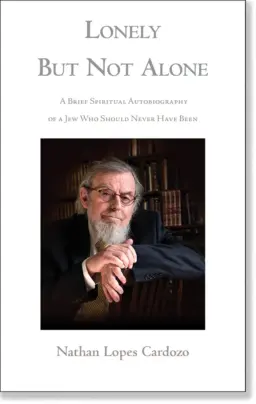
- Rabbi Cardozo characterized the mitzvot as “eternal” and “infinite”: “The mitzvot are the result of eternal spiritual realms touching the physical world without becoming part of it.” Do you agree with this characterization of mitzvot as purely spiritual matters? How might mitzvot be seen as matters purely of this world, which “touch the other world without becoming part of it”?
- Would you agree that the mitzvot have “no existence or role in the physical world other than as an influence”? If we say that the mitzvot were given to us in order to build a perfect society, or in order to refine our character, is this consistent with Rabbi Cardozo’s characterization? What other roles might the mitzvot have? In what way might mitzvot be “eternal” and “infinite” or “temporal” and “finite”?
- The Talmud (Massechet Temurah 16a) recalls a disturbing reality after Moshe Rabbenu’s death:
R. Yehuda said in the name of Shmuel: Three thousand laws were forgotten during the period of mourning for Moshe. They said to Joshua: Ask! He replied: “It is not in Heaven.” (Deuteronomy 30:12). They said to Shmuel: Ask! He replied: “These are the commandments” (Leviticus 27:34) — no prophet has the right to introduce anything new from now on [i.e., after Sinai] . . . . R’ Abbahu said: Nevertheless, Otniel ben Knaz restored [these forgotten laws] via his dialectics îúåê ôéìôåìå. Thus it is written, “Otniel ben Knaz, the brother of Calev, conquered [Kiryat Sefer, and Calev gave Otniel his daughter Akhsah as a wife]” (Joshua 1:17).
If the mitzvot are eternal, what does it mean to say that “three thousand laws were forgotten”? And if they were forgotten, how did Otniel ben Knaz restore them? Does Rabbi Cardozo’s distinction, following the Maharal between one-time ordinances and mitzvot established for all time offer an answer? How would you characterize the laws that were “forgotten” — as “Koh Amar” or as “Zeh haDavar”?