
Thoughts to Ponder

Thoughts to Ponder is a weekly invitation to think dangerously and question passionately. Drawing on the Torah portion, classical Jewish sources, philosophy, and the crises of contemporary life, Rabbi Cardozo challenges religious complacency and spiritual comfort. These essays are written for readers who seek a Judaism that disturbs, questions, and ultimately deepens the human encounter with God and responsibility.

  • Solving the Conversion Crisis and Global Judaism

    In Converting to Judaism and Jewish Thought and Philosophy by Rabbi Nathan Lopes Cardozo

    Israel has been confronted with the plight of hundreds of thousands of people who made aliyah, mostly from Russia, who are children of mixed marriages or who have other Jewish ancestry, such as Jewish grandparents. Most of them are not halachically Jewish since their mothers are not Jewish.  Yet many of them would like to become Jewish. The problem, however, is that the majority do not want to commit themselves to a halachic way of life.

  • The Challenge of Chareidi Exceptionalism

    Part 2 of a series on Chareidi challenges to the State of Israel

    In Israel by Rabbi Nathan Lopes Cardozo

    Integration of the Chareidim into the State of Israel poses unique challenges. Navigating these challenges successfully will necessitate major changes in Chareidi education and lifestyle.

  • A Chareidi Jewish State?

    Part 1 of a series on Chareidi challenges to the State of Israel

    In Israel by Rabbi Nathan Lopes Cardozo

    The increasing Chareidi population poses significant challenges to the State of Israel. At the same time, the secular nature of the State is seen as a significant threat to the Chareidi community. This series examines the challenges, and potential outcomes.

  • Is conversion really possible?

    In Converting to Judaism and Jewish Thought and Philosophy by Rabbi Nathan Lopes Cardozo

    Judaism and the Jewish people are intertwined and interact in ways which nobody can fully grasp. Are we a religion, or a nation? If we are a religion, how can it be that somebody who does not believe in God or refuses to observe even one commandment still remains Jewish as long as he or she is born to a Jewish mother? And if we are a nation, how does religion come in, telling us who belongs to the nation and who does not? Any attempt to find a solution to this problem will always fail. This is one of the greatest mysteries of Jewish identity.

  • Heroism and the Gavra Raba

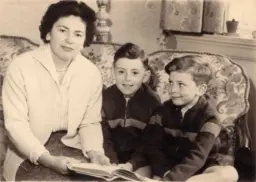
    My Mother a’h

    By Rabbi Nathan Lopes Cardozo

    Only when some kind of separation has set in and the other is no longer immediately available, do thoughts break through which allow a better understanding of those who have been the closest to us.

  • Rev. Abraham Lopes Cardozo

    Ne’im Zemirot

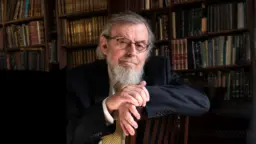
    A Tribute to Abraham Lopes Cardozo z.l.

    In Jewish Thought and Philosophy by Rabbi Nathan Lopes Cardozo

    A Tribute to Abraham Lopes Cardozo z.l. While fully involved in the world, he taught us that spiritual nobility is a thousand times more valuable than all what the great secular world has to offer us.

  • The Revolutionary Future of the Torah and Mitzvot

    In Jewish Thought and Philosophy, Rav Kook and Parashat Mishpatim by Rabbi Nathan Lopes Cardozo

    All humans are fundamentally children of the time in which they live. It is hard, if not altogether impossible, for most people to think beyond their own limitations. It is the commonplace that stands out and holds sway over most of our thinking. To think outside the box requires courage, broad thinking and daring creativity.

  • Aggada and Halachah

    In Halacha by Rabbi Nathan Lopes Cardozo

    Halachah can tell us how to act in a given situation, but it cannot provide insight into the quality of a given act or a sense of the spiritual change that is results from that act. That is the job of Aggadah.

  • The Courage to Be Different

    In Parashat Balak by Rabbi Nathan Lopes Cardozo

    Modern culture insists that identity is something we choose. We are expacted to choose our affiliations, our values, and our commitments as if selecting a product from a shelf. Judaism insists on something deeply countercultural: that identity is received long before it is chosen.

  • The Protest of a Bracha

    In Halacha and Liturgy & Ritual by Rabbi Nathan Lopes Cardozo

    While many of us still live with the notion of surprise, this, we have convinced ourselves, is nothing but the result of our limited understanding and knowledge of our world.