
Oh, that I may believe!
To have faith is to live with unresolved doubts, prepared to rise above ourselves and our wisdom.
Donate now to our High Holiday Campaign


Thoughts to Ponder is a weekly invitation to think dangerously and question passionately. Drawing on the Torah portion, classical Jewish sources, philosophy, and the crises of contemporary life, Rabbi Cardozo challenges religious complacency and spiritual comfort. These essays are written for readers who seek a Judaism that disturbs, questions, and ultimately deepens the human encounter with God and responsibility.
To have faith is to live with unresolved doubts, prepared to rise above ourselves and our wisdom.
From a subjective point of view it seems that the existence and behavior of a single human being is of little importance. Except for those leaders, thinkers and scientists who really make a contribution towards the advancement or devastation of mankind, the vast majority of people, numbering in the billions, do not seem to make any difference in terms of the future and well-being of our society. If not for the fact of their numbers, they would have remained unnoticed and the world would not have missed them had they not been born.

What right do parents have to bind a child to an eternal covenant? Judaism offers a radical answer: not to do so would be the greater injustice. Brit mila is not merely a ritual—it is a declaration that life has purpose, that the human being is destined for greatness, and that the covenant between God and Israel begins from the very first breath.

Just as great scientists are fascinated when they investigate the properties of DNA, or the habits of a tiny creature under a microscope, so should even a secular Jew be deeply moved when he or she encounters the colors and fine subtleties of the world of Halacha.
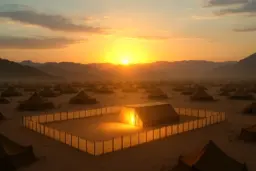
Tetzaveh - The Trivialities of the Tabernacle
In The Kotzker Rebbe and Parashat Tetzaveh by Rabbi Nathan Lopes Cardozo
Judaism is the theology of the physical, the commonplace and the mundane. It is concerned with the everydayness of our lives and struggles, with the devastating effect brought on by the curse of the multitude of trivialities that often keep us busy from morning till night. It struggles with the emptiness of our lives when we do not even have the time to focus on the higher meaning of our existence. Man's paradox is that he is too much at home in this world yet needs to escape his worldliness in order to be consciously part of the universe.

Moshe's leadership and rebellion
It is often forgotten is that the Torah was the first rebellious text to appear in world history. Its purpose was to protest against injustice and mediocrity.

In Theodicy and Parashat Noach by Rabbi Nathan Lopes Cardozo
By making God good by our standards, we are essentially making God into an idol, one who fits our standards and fulfills our needs. That is surely not the Jewish God.

Reflections on a recent trip to America
In Jewish Thought and Philosophy by Rabbi Nathan Lopes Cardozo
Some reflections on a recent trip to America: the good, the bad, and the sublime.

In Jewish Thought and Philosophy, Parashat Lech Lecha and Parashat Shemini by Rabbi Nathan Lopes Cardozo
For centuries, Jewish thinkers have Which is the higher religious value: to serve God in a spontaneous outpouring of religious devotion (autonomy), or to obey the divine imperative (obedience)?

Revelation of a Language
It is in language that human beings reveal their inner lives. Their subconscious overflows and, before they are aware of it, they have already exposed their inner selves.

In Parashat Bereshit and Yom Kippur by Rabbi Nathan Lopes Cardozo
Judaism is a warning not to yield to total pessimism, an admonition to endure truth and to choose life.
In Heschel and Jewish Thought and Philosophy by Rabbi Nathan Lopes Cardozo
I have learned to be constantly thankful to God for His incredible gift of children, children-in-law and grandchildren. I learned this on Friday, June 11, 2010, when my wife and I nearly lost a daughter and three grandchildren.