He encountered a certain place and he slept there . . .
Bereshit 28:11
Yaakov instituted the evening prayer, as it is said, (Bereshit 28:11) “He encountered a certain place and slept there . . .” and “encountered” is prayer, as it is said, (Yermiyahu 7:16) “As for you, do not pray for this people, do not raise a cry of prayer on their behalf, do not plead (tifga) with Me.”
Brachot 27b
Prayer is by far one of the greatest gifts that God has bestowed on man. It enables us to surpass ourselves; to see the world from God’s perspective; to stand still and consider our lives anew; and to create a sense of uneasiness within us. It asks us to realize that there is much more to our lives than the bread we eat and the comfort we demand. In some way it wants us to realize that feeling at home in our world is one of the greatest existential threats that confront us. To live is to possess the art of being a surprised guest in this world, not a tenant. Too much everydayness, however, has overtaken our lives, and meaningful prayer has become mission impossible for most of us. Instead of allowing prayer to transform us, we have converted prayer into a means by which we allow ourselves to get used to the smallness of our existence. Life then becomes a cliché, and the commonplace reigns supreme. Prayer is now being used as a ploy to convince ourselves that we are deeply religious and do not need to wake up and ask ourselves why we exist and who we are.
Even those who are used to going to synagogue three times a day must ask themselves whether the words they utter can be called genuine prayer. Most of us aren’t even aware that there’s a problem because habitual prayer hides the actual art of praying. Too often, our prayer is not much more than the repetition of words as they appear in the prayer book, without the understanding of what they wish to convey.
That being the case, one must ask why tens of thousands of religious and not-so-religious Jews are prepared to go to synagogue and repeat, year after year, the same words that by now are boring for most of them. The fact that they continue to attend synagogue is something of a miracle. What is there in the human spirit that moves them to do so?
Mankind is homo religiosus. Ontologically, his very being is made from a substance that moves him to pray. This is true not only about the religious person but even the atheist. All expressions of wonder and hope are forms of prayer. Watching a sunset, seeing the birth of a baby, listening to majestic music, all elicit from us a need to express wonder and astonishment, which are really forms of praise. Hoping for a good ending, a better future, and the restoring of one’s of health are all forms of prayer, even if they are directed not to God but to nature, or even a nonentity. The deepest feelings in one’s life are often expressed in one utterance: “Wow”! Or, “Please let it end well.”
There is no escape from prayer.
When the religious person prays, he or she knows that behind the words of his repeated daily prayers there is a world that he doesn’t want to let go of, though he feels he has lost it entirely. He intuitively knows that there is a vast landscape of deep content behind these prayers. He no longer lives there, but he bathes in its light. And so he says words that transcend him, because he’s aware that they have great meaning though he is no longer connected to them.
The chutzpah of prayer
How do we dare to speak to God, the Master of the Universe? The presumption that we can just open our mouths and believe that God will listen to us is unrivaled impertinence. When someone wishes to get an audience with the Queen, much paperwork has to be done, many meetings are held by ministers and officials, and security issues are considered. After all that, maybe he’ll be granted an audience in Buckingham Palace; and then, only for a few minutes. But when speaking to the Lord of the Universe, religious people are of the opinion that they can just walk into the inner chambers of the King’s palace. Moreover, they don’t even need to come to the royal palace. They take it for granted that the King will come to them in their homes, and even their bedrooms, where they stand before Him in their nightwear. The implications of all this defy the imagination!
Goethe, the great German poet, said: “He who praises another places himself on the other’s level.” Indeed, what right has man to praise God?
We don’t really know the answer to this question. Perhaps we are like the atheist who said he praised God every day because it was the only way to convince himself that he was not God.
The question, however, is so strong that the Jewish tradition has devised two ways for the praying person to escape this problem so as to avoid embarrassing himself. The first is to hide behind Avraham, Yitzhak, Yaakov, Sarah, Rivkah, Rachel and Leah. It was they who invented prayer and believed it was legitimate despite its impertinence. Apparently, they knew something that we don’t — something that called for praising God. Our defense is therefore clear: We are not the instigators. We are just continuing a conversation of more than 4,000 years. Don’t hold us responsible. We didn’t start it! If not for these men and women, who were closer to You and greater than we are, we would not have dared utter a word of praise to You.
The second means of escape is to hide behind each other. Our most important prayers of praise are recited with a minyan. We only dare to open our mouths if we feel that we are not standing alone before the King of the Universe, presumptuously expressing our praise. In the company of the community, strengthened by our feelings of solidarity and brotherhood, we dare speak to God. A minyan is a city of refuge and a compromise to human weakness. We hide behind each other because we are afraid of being exposed.
What can we say?
It is one thing to dare to pray, but quite another to know what to say. When a delegation is invited to see the prime minister in order to convey the importance of certain community needs, many hours of preparation and careful deliberation precede the actual meeting. Every word and every sentence counts.
How much more consideration should be given to every word before one approaches the King of all kings! To utter the appropriate word requires great profundity. But who is knowledgeable in this? Only those well versed in the art of idiom and phraseology, who know the inner chambers of the human heart in all its purity.
Not everything that comes out of our mouths should reach the ear of God. Which praises and requests are noble and worthy enough? While biblical man was highly skilled in this art, it became an impossible task for modern man. Too much ego permeated his petitions — and even his praises — until it became so embarrassing that something drastic had to be done. A rescue operation had to be initiated, to pull us out of this abyss. Ladders and cranes were brought in, scaffoldings were erected to prevent us from sinking so deeply into our narcissistic swamp that we would ultimately succumb and no longer be able to say anything to God.
And so the prayer book was born. Modern man lacks the vocabulary to say what is in his heart, and even what should be in his heart.
Prayer as dream
Was Yaakov’s dream of a ladder fixed to the earth with its top in heaven a form of prayer? Certainly the dream changed his priorities!
Fixed prayers may also be such dreams. They tell us where our priorities should lie and what we should be dreaming of. When we pray that God’s greatness be recognized by all of mankind, or that the Temple be rebuilt; when we pray for purity in our hearts, or for the mashiach’s arrival, we may say the words, but when looking into our hearts we realize that these matters are not at the core of our lives. They may lie somewhere hidden in our subconscious, but we no longer dream about them because our day-to-day needs have become our priority. Due to our shortsightedness, we cannot see the forest for the trees. We live in a state of spiritual slumber, and these “dream prayers” wake us up. They inform us that we’re on the wrong track and have lost those priorities that should make our lives more meaningful and distinct.
Borrowing Mozart’s notes
Is it possible for one standard set of prayers to express the inner lives of hundreds of thousands of people, male and female, each one psychologically and emotionally unique, spanning centuries?
The prayer book is meant to be a volume not of words but of musical notes. When a great musician plays Mozart, he doesn’t actually play “Mozart”; rather, he borrows Mozart’s notes and plays his own music on these notes. He releases Mozart’s musical notes from their confinement and carries them beyond themselves.
The praying person plays his inner symphony on the musical notes of Israel’s great composers, its Sages. Gifted musicians involved in their orchestral score not only bind their audiences to heavenly spheres; they inspire each other to discover new dimensions of their own souls as well. Similarly, participants in community prayer play the serenades of their souls, which, through a moment of artistic symbiosis, evoke previously unknown worlds in the hearts of their fellow participants.
Prayer as preparation for prayer
What if the inner music of the soul is locked up and cannot break through? Should we stop praying when we’re not in the mood? What does the musician do in that case?
The musician knows one thing — to stop practicing is suicidal. Lack of practice will only make it harder, if not impossible, to perform later. By continuing to practice, he keeps alive his ability to play and gets into the mood. To sit back and wait until he’s in the mood is futile.
And so it is with the praying person. His ability to pray will remain alive only by continuing to pray, even at times when his soul is cold and his heart empty of all feeling.
Most of the time, then, praying is a preparation for prayer. Only occasionally will there be a glorious moment when we will actually pray. But who is to say that the “prayer in preparation for prayer” is not the most valuable and exalted form of divine service?
The need for gratitude
Our ability to think, act, build, love, and enjoy can easily turn into an embarrassment if we don’t use these faculties responsibly. There is indeed one inescapable question: Do we deserve these gifts? Does we have any claim on them? The shattering truth is that we cannot possibly deserve them. Nobody has ever earned the right to love, to enjoy. They are gifts, not rewards. How, then, can we live with dignity and self-respect? There is only one answer. These undeserved gifts require a response. They need to be appreciated. Only then can we have dignity and live a life of grandeur. It is through prayer that we achieve this goal. By thanking and praising God for all of these faculties, we acquire self-esteem. We convert our embarrassment into nobility.
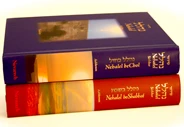
Note: This essay appears as an introduction to the new and fully illustrated weekday siddur Nehalel with English translation. To purchase: www.nehalel.com
Questions to Ponder from the David Cardozo Think Tank:
- Rabbi Samson Raphael Hirsch, in his commentary on Psalms Chapter 4, speaks of the prayer uttered by the believer, who stands and accepts the judgment and truth of the Creator. It is a “prayer” in the sense of the root of the word, which denotes sin or misconduct. He who stands before God asks to be endowed with the truth that will influence his way of life, as opposed to the “plea” in which we utter what is in our heart. The believer, according to Psalms Chapter 4, does not seek material success, only true belief.
- The article likens the prayer to standing before a king. One may ask if prayer from a prayer book is meant to serve as a ceremony or as the audience itself, during which a true and straightforward exchange takes place.
- It appears that Rabbi Hirsch places the prayer parallel to the ceremonial portion – that is, standing at attention – whereas the requests may be added independently, as in the prayers “Heal us” and “Hear our voice.” In our generation it is difficult to assume that education which emphasizes the commandment and not one’s emotions will be able to take root, and occasionally one can see how its purpose becomes lost and brings about a separation between the individual and the prayer. We therefore witness welcome initiatives to explain the prayers and prepare spiritual translations to everyday language. Nevertheless, there are questions that everyone should ask oneself:
- Along with the obvious advantages of an open dialogue with God, which enables our soul to grow, might we not lose our ability to join the absolute, that which is greater than us?
- Do we wish to see the private prayer together with the public one? If yes, then how?
- Does the necessity to preserve uniformity of the synagogues take precedence over the growing feeling that prayer is losing its relevance to individuals and communities, or should we now change the prayer text in the hope that the controversy that arises will be resolved?