I will sanctify the Tent of Meeting and the altar, and I will consecrate Aaron and his sons to serve Me as priests.
Shemot 29:44
The Holy of Holies — the inner sanctuary of the Tabernacle and later the Temple in Yerushalayim — was an area that only the High Priest was allowed to enter, and only once a year, on
Yom Kippur.
Yet even the Holy of Holies was occasionally in need of repair. To provide for such an eventuality there were openings in the upper chamber leading down into this sacred area. Artisans, who were themselves Kohanim, were lowered from above in tevot (boxes). Each box was open only to the side of the wall so that the men could do their job but “could not feast their eyes on the Holy of Holies”.[1]
In Chassidic thought, the above tradition was given an allegorical meaning. In Hebrew, tevot does not only mean “boxes” but also “words.” As such, the words of Jewish learning are seen as ways to enter the Holy of Holies, that is, the heart of every Jew, so as to repair and revive him spiritually.
But just as in the Temple the repairmen in their tevot could touch nothing but the wall’s surface, so the tevot of the Torah can touch only the outer layer of the human heart. For them to penetrate into the inner chambers of the heart requires enormous effort. Through the words, we can grasp the perpetual, holy murmurs from a world beyond, but nothing more. What lies deeper can be accessed only with repair work to open the channels of the heart, which are often closed off and scarred over. Our walled heart allows no access to a ladder upon which we can climb to reach the knowledge of God.
It is words understood by the soul that alone can penetrate the heart. As in the case of musical notes, which are simply a vehicle through which the music itself is achieved, words, too, are merely the channel through which something deeper is felt. Only when the soul is involved can there be a chance for the words to become a song.
The need to reach the heart
Jewish education, like the Holy of Holies, may be in need of radical repair. We are living in times when the Jewish religious imagination seems to be exhausted. We no longer know how to lower ourselves, via the tevot, into the Holy of Holies of the human heart.
We have fallen victim to a sociological and anthropological approach, which has led to the vulgarization of Jewish education. We often ask whether the Jews constitute a race; a people; a religion; a cultural entity; a historic group; or a linguistic unit. But we do not ask what we are spiritually; who we are morally; what we owe the world, and what our mission is. We may be busy repairing Judaism, but we are descending from the wrong upper chamber into an artificial temple, one of secularity.
Jewish education has only one goal, and that is to inspire students to reach for Heaven (Yirat Shamayim) and to transform them into outstanding human beings, in which the concern for their fellow human beings and dedication towards the Jewish people and mankind are achieved through the commandments of the Torah.
The moment any educational system is no longer able to achieve that goal it becomes outdated and dangerous, however much it may have greatly succeeded in earlier generations.
The often repeated slogan in some Orthodox circles, “This is the way our forefathers taught Torah” is of no value unless it is abundantly clear that such a system indeed works in the 21st century. The heavy bombardment of external influences from which even the most Orthodox cannot escape requires constant contemplation and innovation by highly competent Jewish educators. When this demands totally different approaches or drastic changes in the syllabi in schools or yeshivot, then nothing should hold back those responsible from making these changes. No doubt this requires courage. But courage, in the words of Mark Twain, is not the absence of fear, but the mastery of fear.
The need for motivation
Parts of the religious world today have fallen victim to a kind of religious behaviorism, the belief that Judaism glorifies the deed without proper motivation and inspiration. What we do is only the minimum of what we are. Deeds are outpourings; they are not the essence of the self. This does not minimize the importance of the Jewish belief that outer deeds create inner feelings and mentalities. The heart is, after all, a lonely voice in the marketplace of the living. But without constantly emphasizing the fact that all observance is ultimately for the sake of transformation of the whole person, Judaism will not be a beloved friend of the child or the student. This is the holy task of Jewish education about which the sages were concerned when in every generation they considered the need to change the rules of Jewish study programs so as to accomplish the maximum.
We are blessed with synagogues and educational institutions, but how many of the worshippers are still connected with their “inner life” their neshamot (souls)? Lots of Jewish children receive plenty of excellent Jewish religious information, but how much do they learn to appreciate? How do we give them the tevoth with which to enter their own hearts?
Transformation not information
We speak a great deal about Jewish continuity as a goal of Jewish education. But we forget that it is transformation not information, that we are looking for. We are told by our Sages that just walking into the Mishkan or the Temple could create “new” people, for they were astonished and amazed by the many miracles that took place in its confines. It was not Jewish continuity that the Temple guaranteed but a radical re-creation of the Jewish spirit, which made souls grow wings and fly. It served as a protest against the stale and the obsolete. It caused one to be so taken in by the spiritual power of the Torah that he was able to see God everywhere, like the Chassidic Rebbe who would walk in the forest to see the tall, swaying trees praying shemoneh esrei (The Eighteen Blessings). As if they were performing a transcendent dance, reaching towards Heaven.
Jewish education must be like a work of music, which is capable of introducing us to emotions that we never cherished before. It is boring unless we are surprised by it. Every thought is a prison if it does not evoke in us an outburst of amazement. We must be wary of spiritual minimalism. The words of the Torah are not allowed to be stationary; they have to astonish.
We must realize that we either ascend or descend. And we must never forget that at the core of each of us there resides a tzaddik, ready to take slip into the garments of priesthood in a “kingdom of priests and a holy nation”.
Questions to Ponder
- “Jewish education has only one goal, and that is to inspire students to reach for Heaven (Yirat Shamayim) and to transform them into outstanding human beings.” Do you agree that this is the goal of Jewish education? What other goals do you feel that it should have?
- What changes would you introduce into your community’s Jewish educational system in order to reignite the fires of amazement and bring about individual transformation?
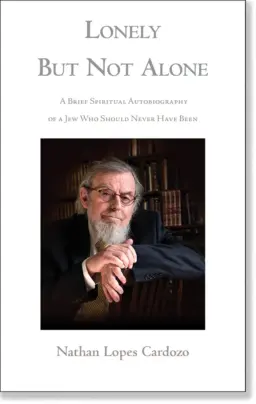
- Have you ever had an experience like the sort of transformation or “repair from within” described by Rabbi Cardozo? Can such an experience ever really be conveyed to another? What implications does this have on the revival of amazement, which Rabbi Cardozo believes to be so integral to Jewish education?
[1] Middot 4:5, Pesachim 26a.