Halacha

The Jewish Law

Halakhah is often translated as “Jewish law,” yet its literal meaning is “the way” — the path along which Jewish life unfolds. Rooted in the Torah and shaped through centuries of debate, interpretation, and responsa, Halakhah is not a static code but an ongoing conversation. It seeks to sanctify daily existence, bringing Divine presence into the concrete details of life.

  • Aggada and Halachah

    In Halacha by Rabbi Nathan Lopes Cardozo

    Halachah can tell us how to act in a given situation, but it cannot provide insight into the quality of a given act or a sense of the spiritual change that is results from that act. That is the job of Aggadah.

  • The Protest of a Bracha

    In Halacha and Liturgy & Ritual by Rabbi Nathan Lopes Cardozo

    While many of us still live with the notion of surprise, this, we have convinced ourselves, is nothing but the result of our limited understanding and knowledge of our world.

  • Halacha and “trivialities”

    In Halacha by Rabbi Nathan Lopes Cardozo

    Commonplace deeds are the moments through which man has the opportunity to meet God more intensively than at any other instant. Trivialities were created by God in order to show man that there are no insignificant moments and that every move of man counts, however small.

  • What’s wrong with Idol Worship

    In Halacha and Parashat Va'etchanan by Rabbi Nathan Lopes Cardozo

    Various commentators disagree on why the Torah was so adamant about prohibiting idol worship. This debate exposes some a profound idea behind Jewish monotheism.

  • Halachic Limits to Halacha

    Rabbinical Authority in the Modern Era

    In Halacha and Israel by Rabbi Nathan Lopes Cardozo

    To run a secular, but Jewish country is an almost impossible task. The idea alone is a contradiction in terms. Secular, but Jewish? The difficulties come from all sides, but one of the major obstacles no doubt arises from the fact that the purpose of secular law differs from that of Jewish Law.

  • Mitzvoth, Minhagim, and Their Dangers

    In Halacha by Rabbi Nathan Lopes Cardozo

    At times, we are confronted with problems with how some people observe some well-established customs, and even mitzvoth.

  • Baruch Spinoza and Johann Sebastian Bach

    The tragedy of the meeting that never happened

    In Halacha and Spinoza by Rabbi Nathan Lopes Cardozo

    What if two of Europe’s greatest minds had met—Baruch Spinoza, the philosopher who rejected Jewish law, and Johann Sebastian Bach, the composer who obeyed every rule of musical composition? Bach’s music provides the perfect response to Spinoza’s critique of Halacha: true creativity is not born from rejecting rules, but from mastering them. The law, far from suppressing the soul, becomes the instrument through which it sings.

  • Between Frumkeit and Religiosity

    The Law of the Nazir

    In Halacha and Parashat Naso by Rabbi Nathan Lopes Cardozo

    Many people feel the need to express their religious devotion through the acceptance of stringencies that conventional Jewish Law does not in actual fact require. But the Torah does not appear to condone such stringencies.

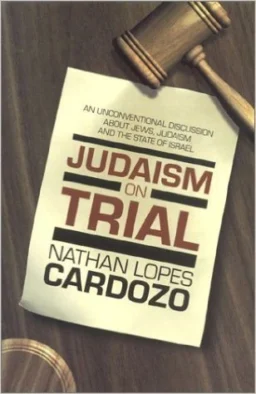
  • Judaism on Trial

    An Unconventional Discussion about Judaism, Jews and the State of Israel

    In Education, Halacha and Jewish Thought and Philosophy by Rabbi Nathan Lopes Cardozo

    Arguing that science and anti-religious philosophy are not responsible for the decline of Judaism, Rabbi Cardozo says it is those who teach it that make Judaism appear irrelevant to the needs and problems of modern man. Jewish law and custom are taught as a dogmatic creed and no longer contains the exciting spontaneity of worship, while remaining formalistic, replacing love with habit. Instead, the author believes that Judaism must reflect deep compassion to recapture the flowing fountain of a glorious tradition-if not, all becomes meaningless. The author is dean of the David Cardozo School for Jewish Studies and Human Dignity.

  • For the Love of Israel and the Jewish People

    Essays and Studies on Israel, Jews and Judaism

    In Halacha and Israel by Rabbi Nathan Lopes Cardozo

    How is it that contrary to all the laws of history, the Jewish people outlived so many powerful empires? How was this tiny nation able to make an unprecedented contribution to the well being of all of humankind? Why did the Jewish people become a source of endless irritation to those who opposed its ethical teachings? Finally, how can the State of Israel rediscover its Jewish identity as the source of its greatest blessing and hope? Nathan Lopes Cardozo addresses these and other questions throughout this remarkable collection of essays.

1 6 7 8