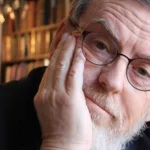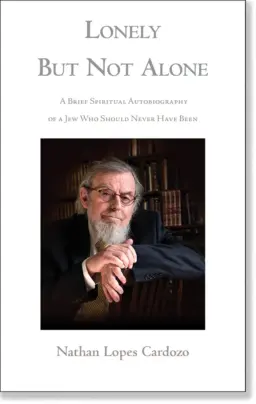
Today is my 80th birthday.
It has been an unusual journey, to say the least.
Like Bnei Yisrael, who travelled through the desert for forty years, so my eighty years have been accompanied by upheavals, great excitement, setbacks, failures, challenges, rebellion, and marvellous moments.
While some experiences were painful, they were at the same time moments of intense inner joy. They reminded me that God was still speaking to me. I lacked nothing.
I had the great zechut (merit) to be born of an intermarriage, which I believe, with all its contradictions, was forged by God so that I could choose to become Jewish.
To be Jewish is a mission, a call to eternity, and the greatest privilege that can befall a human being. I have dedicated my life to this by teaching, writing and inspiring.
“Our existence is either superfluous or indispensable to this world. It is either tragic or holy to be a Jew”, wrote Rabbi Abraham Joshua Heschel.
In truth it is superb.
Judaism is an act of dissent and audacity in a world of complacency and mediocrity.
If all Jews knew what it really means to be a Jew, not one of them would remain secular.
* * *
I have been blessed with the capacity to be radically astonished.
Wherever I go—whatever I do, see, think, and feel—my whole being is in a state of marvel. When I drink a cup of coffee, have a day-to-day conversation, or brush my teeth, it is as if I stand outside of myself looking into somebody else’s life and marvelling at its weirdness. It is completely bizarre.
At this moment, our entire family is facing serious health problems, the nature of which, for personal reasons, I cannot elaborate.
I am constantly reminded of the dazzling bracha (blessing) that we say multiple times a day when we relieve ourselves. We call it Asher Yatzar:
Praised are You, Lord, Sovereign of the universe, Who devised the human being ingeniously, forming in him multiple orifices, multiple chambers. It is revealed and known to Your glorious throne, that if any of these break down or any of these get clogged, it will be impossible to subsist and stand in Your presence. Blessed are you, Healer of organs and doing marvels.
* * *
I suspect that my capacity for wonder started with my unusual birth. It was a Friday night in 1946. A Dutch Jewish doctor in Amsterdam, working under difficult conditions, delivered me in a most unusual and daring way. It was a rescue operation in which my mother and I nearly didn’t make it!
When today I hold one of my great-grandchildren in my hands, only a few hours after their birth, I would love to initiate a conversation with them and ask:
Tell me what you think of this world you’ve just entered?
And if the baby were able to speak, he or she would say:
Wow! This is marvellous! I am completely speechless! Who are you? What is this? Why am I here? What does it mean? What does it want from me? How am I going to live this life? What is the art of living?
It is these questions that moved me to try to become religious. I say try, because I have not succeeded. The overall awe of facing the marvellous terror of this world is perhaps too much for any person to handle. We can never be fully religious.
But this sense of awe is the foundation of all religions. It is a protest against taking anything for granted.
For me, secularism is the inability to deal with the real existential questions life presents, out of fear of the answers, or simply a desire not to know.
I cannot understand how anyone—even when one claims to be an atheist—can eat or drink and simply get up without uttering so much as a word of gratitude. This is a human tragedy of enormous proportions.
* * *
To live with religious commitment is to face opposition, to dare, to defy. Anything else is evading the challenge, drifting with the current. True religion is a perpetual, ongoing event—a kind of war with the commonplace, with the mundane, and with the contentment to which billions of people have fallen victim.
To live with religious commitment is to face opposition, to dare, to defy.
It is not enough to have faith. Religious truths must be lived, not merely believed and meditated over. General Philosophy, Buddhism, and other -isms may tell us to be amazed, but they do not tell us what to do with this amazement.
We need to be taught not to run away from the world, but to encounter it in all its complexities. We must translate religious truth and the trivialities of day-to-day life into common deeds to imbue the ordinary with eternity.
This is the purpose of the mitzvot: to make the commonplace exceptional. To make the finite infinite. To surpass the ordinary, and to make it holy.
The mitzvot aim to turn the most trivial act into a moment of awe. This is what we do when we say brachot (Wow!), sanctify the Shabbat, refine our consumption of food by eating kosher, bring holiness into our sexuality, and sensitivity into how we speak about others.
* * *
But perhaps the greatest challenge of religious life is the curse of day-to-day routine, which dulls our sense of awe and undermines the foundations of our faith.
Without constant renewal, without perpetual effort, religion becomes nearly meaningless. As the prophet said, “Their fear of Me is a commandment of men learned by rote.” (Yeshayahu 29:13).
One either rises or descends. To be a man or woman of faith, one must earn it. One cannot inherit it. As Rabbi Abraham Joshua Heschel said, “only he who is a pioneer is worthy of being an heir.”
Beyond the problem of secularism is imitation and religious plagiarism. To do the same thing as one did the day before is a lynching of the soul.
We can even plagiarize ourselves. We must strive to rekindle the fire of the soul every moment of every day; a thunder in the soul!
After 80 years, I still have not reached this goal. But what I know is that with all my failures and shortcomings, as long as I am on this journey, there is hope. It is not the arrival that is important but the journey itself. This is the root of joy. And, as Spinoza famously wrote: joy is man’s passage from a lesser to a greater perfection.
But another question arises: Am I worthy of being religious? To be religious is meant to be a romance with God, but romance cannot be sustained without rapture. How can it coexist with repetition, rather than constant surprises?
I am afraid for myself and the millions of others, who, in the words of Rabbi Heschel,
are never embarrassed at their own pettiness, prejudices, envy and conceit, never embarrassed at the profanation of life. A world of grandeur has been converted into a carnival. There are slums, diseases, and starvation all over the world and we are building more luxurious hotels in Las Vegas.
Am I part of this embarrassment? Do I blush enough when I drink my morning coffee?
How does one achieve awe while living among good people who have often lost the art of radical amazement?
It is a lonely road I am traveling, and sometimes it is very painful. I try to be noble and dignified even when it becomes a real challenge. Only God knows whether I succeed.
But I am not alone as long as I know that my wife, my children, grandchildren, and great-grandchildren—all of them shomrei mitzvot—together with my friends and students, travel with me on this fascinating road. There is no greater merit than having them around me.
I just hope that I will continue to be utterly amazed, to wonder, to be surprised. To keep trying to be religious, to fight for it, to transform, to keep on striving to observe the commandments as moments of great exaltation. And to enjoy this road which is, sadly enough, travelled by fewer and fewer people.
I hope I will be able to continue to choose to be Jewish, not out of rote but to observe the commandments as musical notes when I play them on the harp of my soul. And to continue to encounter the thunder and lightning as when God revealed His Torah at Mount Sinai, to be hit with an uppercut under the chin and nearly be knocked unconscious by the wonder of it all.
In the next forty years I expect the road to be even more unusual, and at my hundred-twentieth birthday I will write another essay in the Jerusalem Post—may they have the merit to publish it!—and let my readers know how things are going.
But in case I have to leave this world earlier, I hope that mine will have been a privileged journey that inspired others.
Will I ever be religious? I do not know. But, as Baruch ben Michael said in his Ethics, “All things perfect are as difficult as they are rare.”